


Author: Site Editor Publish Time: 2026-06-07 Origin: Site
B2B procurement teams are fundamentally shifting their sourcing strategies. They no longer treat industrial fabrics as disposable commodities. Instead, they view them as engineered structural assets. This perspective changes how companies evaluate and purchase protective materials.
Unfortunately, off-the-shelf tarps frequently fail in high-stress applications. They rely on generic polymer blends. They feature inadequate dimensional tolerances. Standardized load capacities simply cannot withstand extreme operational conditions. You risk cargo damage and costly downtime when using these generic covers.
You need a far more resilient approach to protect valuable assets. Custom manufacturing and Original Design Manufacturing (ODM) offer the definitive risk-mitigation strategy. We will explore specialized industrial, logistics, and extreme-weather applications where these engineered fabrics excel. You will learn how precision engineering tackles unique environmental stressors. By understanding these manufacturing frameworks, you can secure materials specifically designed for your exact operational requirements.
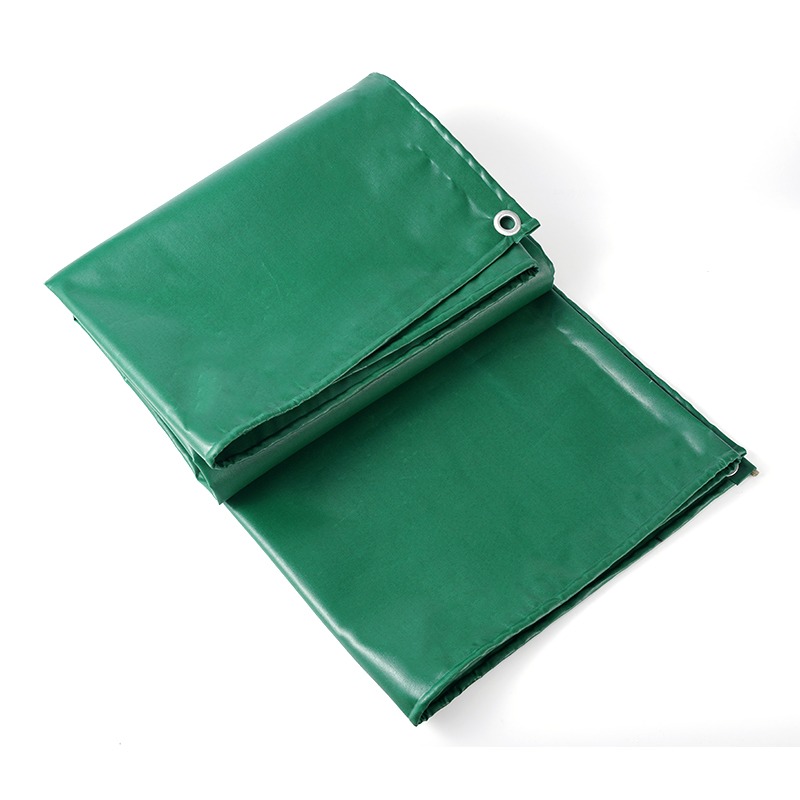
Precision Engineering: Customization extends beyond size and color, allowing control over yarn denier, coating thickness, and polymer additives.
OEM vs. ODM Clarity: OEM ensures brand consistency on verified specs, while ODM develops proprietary fabric matrices for unique environmental challenges.
Risk Mitigation: Direct-to-manufacturer sourcing provides technical data sheet (TDS) transparency, precise lab-dip prototyping, and scalable container-load consistency.
Standardized tarps hide massive operational costs. Buyers often focus on the initial purchase price. They ignore the inevitable costs of premature failure. Off-the-shelf options rarely fit specialized equipment perfectly. This poor fit causes severe wind-whip damage during transport. The loose fabric flaps violently against the load. This friction destroys the protective coating. Eventually, the base yarn frays and snaps.
Ready-made options also suffer rapid UV degradation. Their generic coatings cannot handle prolonged exposure to harsh sunlight. The polymers become brittle and crack. Furthermore, standard PVC stiffens dangerously in sub-zero environments. It shatters upon physical impact. You face immediate cargo exposure. Frequent replacement cycles quickly consume any initial savings.
Complex shapes demand precision engineering. A standard rectangular tarp cannot secure a 5-sided industrial generator. You cannot tension it properly. Asymmetric tension structures require carefully engineered curves. You need 3D modeling for accurate fabrication. Advanced software maps the exact stress points across the fabric.
Engineers cut the fabric according to these precise 3D models. Proper tensioning prevents hazardous water pooling. It stops destructive wind uplift. Your equipment remains fully protected under optimal fabric tension. Diverse industries rely on Custom tarpaulin solutions to secure their critical assets securely.
Regulated industries cannot afford to use generic covers. They require strict compliance documentation. Indoor warehousing and event structures demand Fire Retardancy (FR) certification. Oil and gas sites need Anti-Static (AS) properties. These special fabrics prevent dangerous spark generation. Agricultural and pharmaceutical sectors require food-grade (FDA) compliant materials.
Custom manufacturing ensures strict regulatory compliance. You receive batch-specific testing reports from the factory. This proactive approach mitigates your corporate liability. You avoid heavy fines, safety incidents, and insurance disputes by specifying the exact chemical properties required by law.
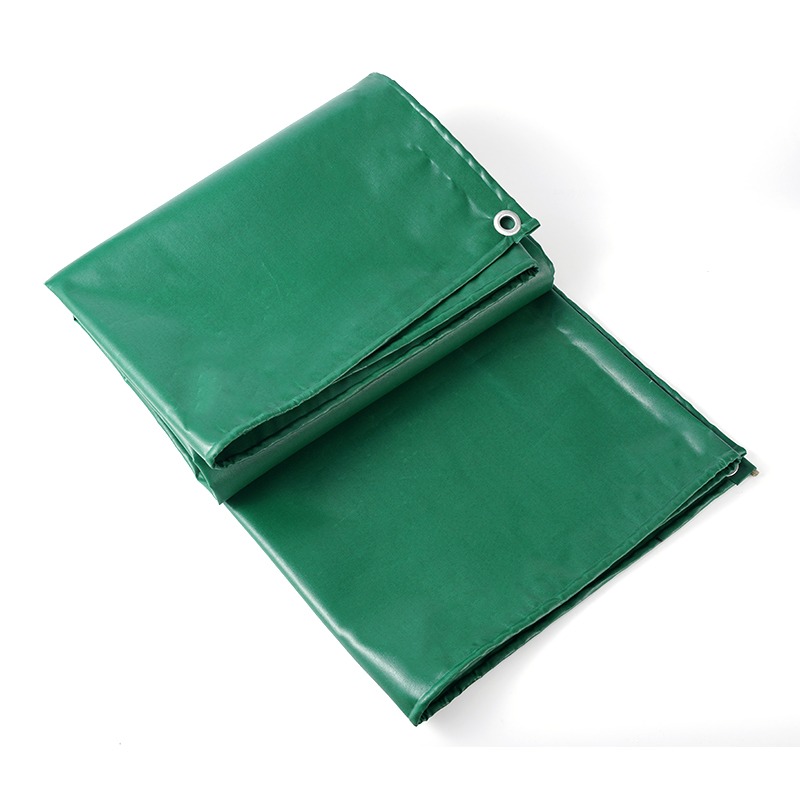
Procurement teams must understand the difference between OEM and ODM services. Selecting the correct manufacturing framework determines your project success. Each model serves a distinct operational need.
OEM is best for buyers needing proven structural specifications. You already know exactly what material works for your industry. However, you require custom branding, specific hardware finishing, and tailored packaging. You might need precise grommet spacing or heavy-duty D-rings installed at specific intervals.
This model offers predictable lead times. It relies on standardized quality control protocols. You leverage the factory's existing fabric formulas. You focus entirely on the physical configuration and brand presentation of the final product.
ODM is best for complex problem-solving. It goes far beyond simple physical alterations. When evaluating ODM custom tarpaulin technology benefits, buyers discover massive advantages for unique environmental challenges. Engineers develop a bespoke thermoplastic polymer matrix specifically for your application.
For example, you might need a tarp for Middle Eastern oil rigs. It must withstand extreme sandstorms while enduring rapid daily temperature fluctuations. Another ODM intervention might involve formulating specialized anti-ammonia coatings. Agricultural biosafety curtains require this chemical resistance to survive animal waste exposure. The factory designs the exact chemical recipe to solve your specific failure points.
Manufacturing Model | Primary Focus | Ideal Use Case | Level of Customization |
|---|---|---|---|
OEM | Branding & Hardware | Standard industrial covers, branded logistics fleets | Dimensions, color, logos, grommets, hems |
ODM | Chemical & Structural Engineering | Extreme weather, chemical exposure, specialized agriculture | Polymer formulas, UV/FR additives, bespoke weaving |
You must evaluate specific technical criteria when sourcing industrial fabrics. Purpose-built Custom tarpaulin solutions rely on seven distinct engineering parameters. Mastering these variables ensures optimal performance.
The base yarn dictates the tearing strength. You must select the correct weaving pattern. Plain weave offers standard multidirectional strength. Panama weave provides enhanced tear resistance for heavy loads. Rip-stop grids isolate punctures to prevent catastrophic tearing. You also determine exact yarn strength. An 800D yarn suits medium-duty applications. A 1000D yarn handles extreme industrial stress and high wind loads.
Fabric weight directly impacts both durability and usability. You must calibrate the weight-to-strength ratio carefully. Tarps typically range from 300 to 1300 GSM (Grams per Square Meter). A heavier fabric increases puncture resistance. However, it also increases the operational handling weight. Workers may struggle to deploy a massive 1300 GSM cover safely. You must balance heavy-duty protection with ergonomic handling requirements.
How the PVC applies to the yarn matters immensely. Knife-coated PVC forces liquid polymer deep into the woven fibers. This creates maximum adhesion and prevents delamination. It guarantees longevity in harsh outdoor conditions. Conversely, laminated processes sandwich the yarn between PVC films. This method is highly cost-effective. It produces lighter fabrics suitable for temporary or indoor applications.
Extreme environments require custom chemistry. You can specify precise chemical additives during the extrusion process. High-grade UV inhibitors prevent sun damage and polymer breakdown. Cold-crack resistance formulations keep the fabric flexible in extreme winter conditions down to -40°C. Anti-mildew treatments protect organic cargo and prevent fungal degradation in highly humid climates.
The topcoat finishes the protective barrier. You must choose the right surface treatment for your application. Acrylic topcoats provide basic environmental protection and improve printability. PVDF topcoats offer advanced self-cleaning properties. Dirt and grime wash away naturally with rain. PVDF also ensures prolonged colorfastness. It maintains a stringent color variation standard of ΔE ≤ 1.5 over many years.
Standard stitching fails quickly under heavy tension. High-frequency welding merges the PVC layers at a molecular level. This creates a completely waterproof seam that is stronger than the base fabric itself. You should specify double-stitched reinforced hems for mechanical stress points. Integrating internal PP or Nylon ropes into the perimeter hems drastically improves overall load distribution.
Fabric strength means nothing if the tie-down points fail. You must demand custom placement of high-quality hardware. Specify rust-proof brass or stainless steel grommets for marine or highly corrosive environments. Add industrial-grade zippers for access panels. Integrate load-bearing webbing straps for heavy lifting and secure anchoring. Every hardware choice must match the fabric's engineered lifespan.
A reliable factory maintains total transparency throughout production. You should expect a highly structured implementation workflow. This manages expectations and eliminates costly surprises.
The process begins by translating your requirements into a formal engineering brief. The factory laboratory formulates the initial mixture. They produce A4-sized physical samples known as lab dips. You review these physical swatches to lock in the exact color profile. You also verify the GSM weight and test the coating adhesion quality before moving forward.
You evaluate the lab dips alongside the finalized Technical Data Sheet (TDS). This document legally binds the factory to specific performance metrics like tensile strength and tear resistance. Once you approve the physical sample and sign the TDS, the factory prepares the manufacturing lines.
The factory initiates 24/7 extrusion, weaving, and coating processes. Continuous automated monitoring tracks the production. Laser sensors ensure strict thickness tolerances. Tension controllers prevent yarn distortion during coating. Quality control personnel conduct random batch testing. They verify UV resistance and cold-crack performance in on-site testing chambers.
Custom manufacturing requires careful logistical planning. The factory provides transparent forecasting of Minimum Order Quantities (MOQs). These MOQs vary by customization tier. The logistics team calculates exact payload capacities. They determine how many rolls or folded pieces fit perfectly into 20ft and 40ft HQ containers. This precision optimizes your global freight costs.
Workflow Phase | Timeline | Key Deliverable |
|---|---|---|
Specification & Lab Dip | Days 1-7 | A4 Physical Samples |
Concept Verification | Days 7-10 | Signed Technical Data Sheet (TDS) |
Mass Production & QC | Days 10-35 | Finished Custom Fabric Rolls/Covers |
Yield & Logistics | Days 35-40 | Optimized Container Loading Plan |
Sourcing direct from a manufacturer presents certain risks. You must distinguish an authentic factory with robust R&D capabilities from a white-label trading company. Thorough vetting protects your supply chain integrity.
Trading companies often pretend to be primary manufacturers. They usually lack specialized laboratory equipment. They give vague or evasive answers when you ask about specific polymer formulations or coating technologies. If a supplier cannot explain the difference between knife-coated and laminated PVC, they are likely a middleman. Middlemen cannot guarantee batch-to-batch technical consistency.
You must insist on viewing formal certifications. Request current ISO 9001 certifications. Demand third-party testing reports from recognized agencies like SGS or Intertek. These reports must tie directly to specific recent production batches. Furthermore, verify all environmental and safety compliance documents. Authentic factories readily provide REACH and RoHS compliance certificates for their polymer mixtures.
Always conduct an audit before placing your first purchase order. If you cannot visit in person, request a comprehensive virtual factory tour. Focus the camera on the actual coating lines. Ask to see the testing laboratories. Look for operational weatherometers, tensile strength testers, and color spectrophotometers. Finally, inspect the raw material storage areas. Check that they use 100% virgin resin rather than cheap, degraded recycled fillers.
Moving away from standardized products toward custom and ODM sourcing is a critical strategic investment. It maximizes product longevity. It ensures absolute operational safety in demanding environments. Generic tarps simply cannot provide the engineering assurances required by modern industry.
Your shortlisting logic must remain systematic. First, define your exact environmental stressors. Second, map those stressors to the specific engineering parameters we discussed. Finally, rigorously vet the factory's internal R&D capabilities and quality control infrastructure.
Procurement teams should take immediate action to secure their supply chains. Request a technical consultation with an ODM specialist today. Submit your current material specification sheets for a comprehensive performance audit. Order a custom lab dip to experience the difference firsthand. Engineered fabrics will ultimately transform your operational reliability.
A: MOQs vary significantly based on your required level of customization. Minor custom sizes or standard colors may only require 1-2 tons of material. However, developing highly specialized custom polymer colors or bespoke chemical formulations typically requires a minimum run of 5,000+ square meters to cover extrusion setup costs.
A: The prototyping timeline depends on complexity. The factory usually produces flat material lab dips in 5-7 days. If you require a fully finished, 3D-shaped prototype with custom hardware and welding, expect a 10-15 day turnaround time before shipping.
A: Authentic factories maintain rigorous testing protocols. They conduct continuous in-house laboratory testing during extrusion and coating. They also coordinate pre-shipment third-party testing with agencies like SGS. You receive a batch-specific Technical Data Sheet (TDS) verifying all chemical and mechanical properties before the container ships.
A: Yes. Advanced manufacturers offer several sustainable options. You can specify GRS-certified recycled base yarns for the internal mesh. Factories can utilize eco-friendly, phthalate-free plasticizers. Leading facilities also operate using closed-loop water systems and advanced emission scrubbers to minimize their environmental footprint.


