


Author: Site Editor Publish Time: 2026-06-04 Origin: Site
Agricultural operations face a harsh dual challenge every season. They must maintain absolute airtightness for chemical pest control while surviving extreme environmental stress. Freezing frost, high winds, and relentless UV exposure constantly threaten equipment integrity. Selecting the right protective gear requires moving far beyond basic waterproof claims. You must carefully evaluate specific engineering metrics like fabric denier, coating thickness, and advanced welding techniques. Relying on inferior covers inevitably leads to chemical leakage, failed pest treatments, and severe secondary environmental contamination. In this guide, we explore the crucial specifications for heavy-duty agricultural covers. We will examine core material differences, structural add-ons, and essential procurement checklists. You will learn exactly how to evaluate technical specifications and choose the optimal frost-resistant barrier for your unique operational climate.
Airtightness is paramount: High-frequency (HF) welded seams and specialized coatings (PE/PVC) are mandatory for gas impermeability.
Contextual material selection: Choose fabric density (e.g., 220D vs. 500D) based on regional wind shear, not just price.
Frost and cold-crack resistance: True agricultural covers require specific chemical formulations to prevent brittleness in sub-zero temperatures.
Standardization vs. Customization: Evaluate suppliers based on panel-splicing capabilities and compliance with agricultural benchmarks (e.g., FAO recommendations).
Fumigation is an exacting science. It demands precision, reliable equipment, and absolute environmental control. When operators compromise on covering materials, they invite significant operational and financial risk.
The leakage risk: Compromised seals allow fumigant gases to escape prematurely. This leads to ineffective insect and fungal elimination. Pests survive the treatment, destroying valuable stored grain or sensitive crops. Furthermore, leaking gases waste your chemical expenditure and pose serious health hazards to nearby workers.
Cold-cracking and weather degradation: Standard plastic sheets fail under extreme conditions. They become brittle and shatter when exposed to severe frost. Conversely, extreme heat and high UV exposure (often reaching surface temperatures up to 80°C) degrade inferior polymers quickly. This operational cost multiplies rapidly as you are forced to replace degraded sheets mid-season.
Handling and tearing: Agricultural deployment is inherently rough. Workers drag heavy covers across abrasive concrete, gravel, and sharp crop stubble. Unreinforced edges fail quickly under this mechanical stress. When subjected to high coastal winds, minor tears immediately expand, destroying the gas-proof seal entirely.
Common Mistake: Many buyers focus solely on the initial purchase price. They ignore the hidden costs of chemical wastage and crop spoilage caused by micro-tears.
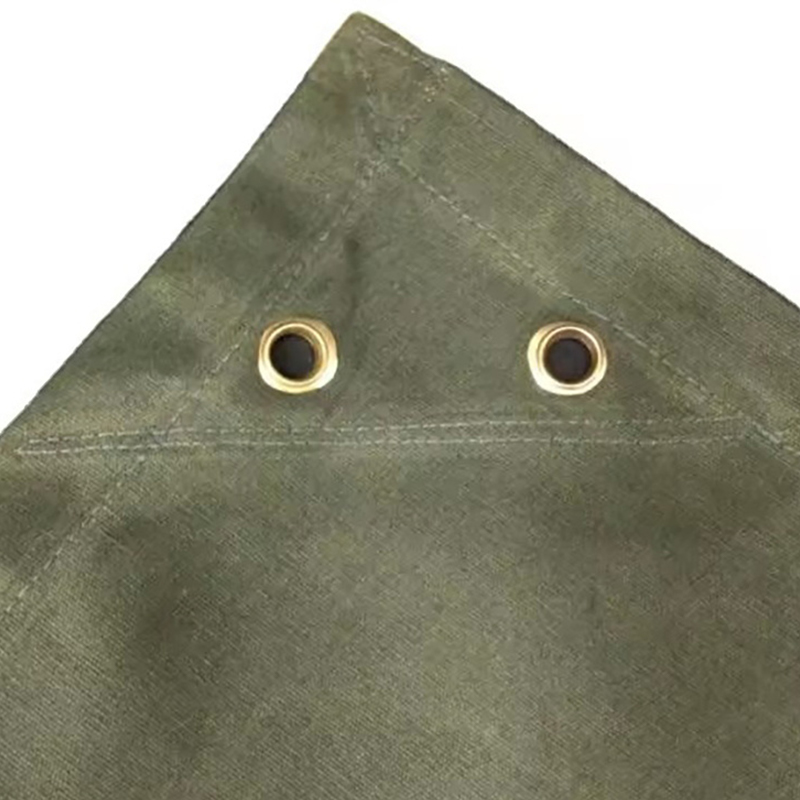
Understanding material science helps you match the exact fabric to your regional climate. Modern agricultural covers rely on specific polymer coatings applied to heavy-duty base fabrics.
Traditional canvas breathes naturally. This breathability completely invalidates it for gas-based pest control. To function properly, a true fumigation canvas tarpaulin requires heavy-duty single-sided or double-sided polymer coatings. These specialized coatings fill the microscopic gaps between canvas threads. They achieve zero gas permeability while maintaining the exceptional abrasion resistance expected from a canvas base.
Engineers often blend High-Density Polyethylene (HDPE) and Low-Density Polyethylene (LDPE) to create versatile agricultural sheets. A high-quality PE tarpaulin provides excellent lightweight deployment options. Typically manufactured around 300GSM, it offers outstanding frost resistance. Its inherent flexibility in sub-zero temperatures makes it a cost-effective choice for seasonal frost covers and general crop protection.
For heavy-duty grain treatments, Polyvinyl Chloride remains the strict industry standard. A standard commercial PVC tarpaulin ranges between 250 and 270gsm, or up to 8 oz/sq yard. This robust material offers a superior lifespan. When maintained properly, PVC meets the UN Food and Agriculture Organization (FAO) guidelines by surviving 4 to 6 full reuse cycles.
Material Category | Typical Weight (GSM) | Primary Agricultural Use Case | Relative Frost Flexibility |
|---|---|---|---|
Coated Canvas | 350 - 500+ | High-abrasion ground deployment | Moderate |
PE Tarpaulin (HDPE/LDPE) | 200 - 300 | Lightweight frost protection | Excellent |
PVC Tarpaulin | 250 - 270+ | Heavy-duty grain fumigation | High (with correct plasticizers) |
You cannot judge a cover purely by touching it. You must demand precise engineering specifications from your manufacturer to guarantee performance.
Traditional stitching punches thousands of tiny holes into the fabric. These holes leak gas instantly. You must demand High-Frequency (HF) welding. HF welding uses electromagnetic energy to melt the polymer coatings together at the molecular level. Emphasize this requirement: only HF welding guarantees a 100% gas-proof seal across joined panels.
Base fabric density directly dictates tear resistance. Evaluate your regional wind shear before choosing a denier rating.
Low wind or mild climates: A 220 Denier base is entirely sufficient. It creates a lighter cover and offers a smoother surface for easy cleaning.
High wind or coastal climates: You require a 500 Denier base. Look for a 14x14 weave density and a 650D-2000D yarn count. This heavier matrix effectively prevents catastrophic wind-whip tearing.
Ignore generic weatherproofing claims. Look for explicit ratings on technical data sheets. A true frost-resistant cover uses specific chemical plasticizers labeled "highly cold-crack-resistant". Similarly, it must feature "UV-stabilized" ratings to survive blistering summer harvests. Without these specific chemical additives, polymers degrade rapidly.
Best Practice: Always request a Technical Data Sheet (TDS) proving the fabric survives cold crack tests down to at least -20°C or -30°C, depending on your geographic zone.
Deploying massive agricultural covers requires significant physical labor. The structural add-ons determine how well the cover survives daily operational handling.
Maintaining a perfect seal in rough environments is difficult. You must require heavy-duty galvanized eyelets to prevent rust. Built-in D-rings and heavy-duty webbing straps distribute tension evenly across the fabric. These hardware components should match the rigorous stress tolerances found on a commercial truck tarpaulin. Weak eyelets will rip out during the first major windstorm.
Provide your ground teams with realistic operational data. Heavy-duty options demand proper operational planning. A standard 18m x 18m PVC grain sheet weighs approximately 90kg. Workers cannot easily maneuver 90kg of fabric by hand without dragging it. Dragging causes invisible micro-abrasions. Always plan mechanical assistance or use enough personnel to lift and place the cover gently.
Manufacturers rarely weave single pieces of fabric large enough for commercial farms. They utilize 5-foot wide panels. They heat-weld these panels together to achieve custom acreage coverage. For example, creating a 35'x60' sheet (2100 sq ft) requires carefully splicing exactly seven panels together. Each welded seam must pass strict quality control inspections.
Identifying a reliable manufacturer takes methodical research. Use this checklist to evaluate potential suppliers before placing a bulk order.
Regulatory Alignment: Verify supplier specifications immediately. Do they align with the UN Food and Agriculture Organization (FAO) recommendations for grain covers? Compliant manufacturers happily provide this documentation.
Warranty and Lifespan Data: Demand transparent data regarding reuse cycles. A reliable manufacturer quantifies lifespan clearly (e.g., stating a "minimum 4-6 heavy commercial uses"). They should also offer multi-year defect warranties on welded seams.
Lead Times vs. Project Needs: Custom-sized, heavy-duty sheets do not ship overnight. They typically require a 4-8 week manufacturing timeline. You must plan procurement well in advance. Align your orders against anticipated seasonal frost dates or upcoming harvest schedules.
Never rush the procurement phase. A late delivery forces you into buying inferior local substitutes, which ultimately compromises your entire pest control strategy.
Securing your harvest against both pests and extreme weather requires precision engineering. You must balance the fabric denier against your local wind conditions. Always prioritize High-Frequency welded seams to ensure absolute chemical containment. Mandate verifiable cold-crack resistance for any winter agriculture applications to prevent shattering.
Your next step is simple. Before requesting a bulk quote, advise your procurement team to demand official technical data sheets (TDS). These documents must verify the GSM, Denier, and cold-weather tolerances explicitly. Armed with hard data, you can confidently invest in a protective barrier that performs flawlessly season after season.
A: No. Standard waterproof covers are rarely gas-proof. Fumigation requires specific non-breathable coatings and HF-welded seams to trap toxic gases safely. Even a heavy waterproof tarpaulin will leak chemical gases if it relies on stitched seams or lacks specialized gas-impermeable layers.
A: Edges are typically weighed down with sand-snakes, water tubes, or specialized ground clamps. This continuous heavy perimeter ensures zero chemical leakage at the base, creating a perfect seal against the concrete or soil.
A: Under FAO recommended standards, a properly maintained 250-270gsm PVC sheet can reliably endure 4 to 6 full grain fumigation cycles. Proper folding, careful storage, and avoiding drag damage extend its functional life.
A: PE is generally lighter and highly flexible in freezing temperatures, making it cost-effective for seasonal frost covers. PVC offers superior structural strength, heavier weight, and absolute airtightness for repeated heavy chemical use.


