


Author: Site Editor Publish Time: 2026-09-13 Origin: Site
Procuring commercial textiles at scale magnifies the cost of specification errors. A slight misalignment in tear strength or coating adhesion often leads to rapid field failure. You immediately face product returns, angry clients, and compromised structural integrity. While suppliers frequently list dozens of metrics on a Technical Data Sheet (TDS), only a handful truly matter. These specific parameters dictate whether the material survives real-world environmental stress and harsh physical handling. We know navigating these numbers feels overwhelming for many buyers. Procurement teams often struggle translating laboratory metrics into reliable field performance. This guide breaks down the core technical specifications required to evaluate these textiles properly. You will learn how to shortlist suppliers and confidently order industrial-grade materials. Understanding these core metrics ensures your next bulk shipment strictly meets exact operational demands.
Weight vs. Strength: High GSM (Grams per Square Meter) does not guarantee high tear strength; the underlying woven base fabric dictates structural integrity.
Coating Methods Dictate Lifespan: Knife-coated fabrics significantly outperform hot-laminated alternatives in heavy-duty applications due to superior chemical bonding.
Yield Optimization: Ordering custom widths for PVC tarpaulin rolls minimizes fabrication waste and welding seams.
Verifiable Compliance: Validating UV, fire-retardant (FR), and anti-mildew claims requires standardized third-party testing reports, not just supplier guarantees.
Understand the vital difference between surface thickness and material density. GSM measures the actual physical weight per square meter. Thickness indicates the physical volume of resin applied over the mesh substrate. We measure thickness using micrometers, typically reading in millimeters or mils. Buyers often assume heavier materials automatically perform better. However, some manufacturers inject heavy fillers like calcium carbonate into the resin mix. This artificially inflates the GSM but makes the fabric brittle.
Over-specifying weight heavily increases your shipping costs. It also makes the final product extremely difficult to handle. For instance, overweight truck covers become stiff and unmanageable in cold weather. Conversely, under-specifying weight risks rapid abrasion and premature structural failure. You need a practical decision framework based on realistic field applications.
Standard Weight Classifications and Recommended Applications
Duty Level | GSM Range | Ideal Implementation Scenarios |
|---|---|---|
Light-duty | 300–450 GSM | Temporary equipment covers, lightweight agricultural tents, indoor banners. |
Medium-duty | 500–700 GSM | Standard commercial transport covers, bouncy castles, inflatable structures. |
Heavy-duty | 800+ GSM | Architectural tension membranes, mining ventilation tubes, liquid storage tanks. |
Always request a strict tolerance margin on your purchase orders. The standard industry tolerance is typically ±5%. Buyers frequently overlook this crucial detail during procurement. You should clearly define acceptable variances in writing. This proactive step guarantees consistency across every PVC tarpaulin you purchase.
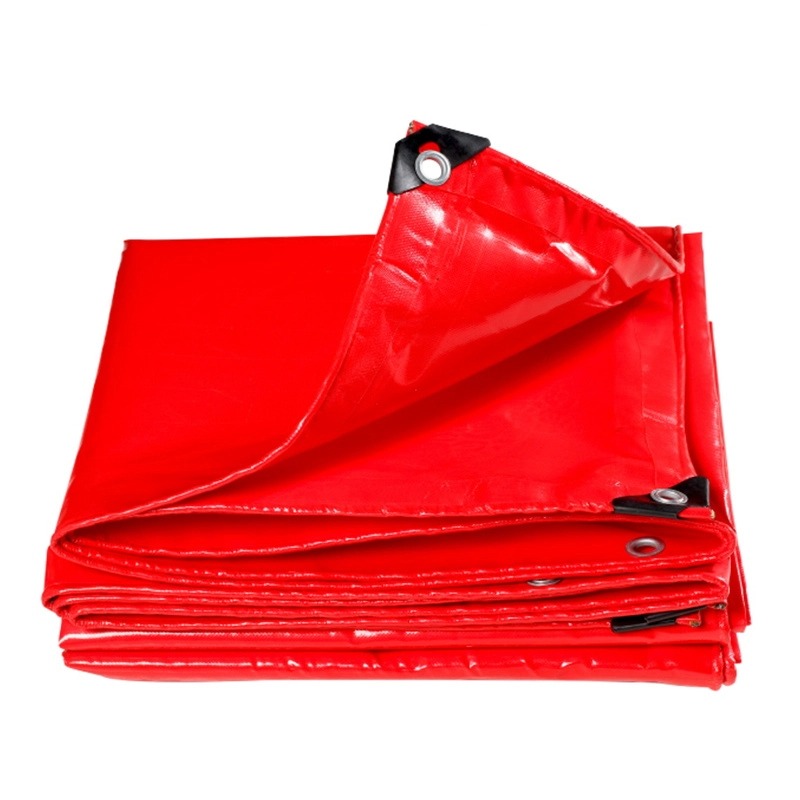
Delamination and tearing almost always begin at the fabric core. They rarely start at the protective surface. If the inner mesh substrate remains weak, the outer coating cannot compensate. We must closely analyze the underlying textile architecture to prevent structural failure.
Yarn Denier (D): This defines the exact mass and thickness of the raw polyester yarn. Common industry examples include 500D, 1000D, and 2000D. Higher denier indicates thicker yarn, which provides significantly higher warp and weft tensile strength. High-denier yarns directly resist sharp object punctures in field environments.
Thread Count / Weave Density: This metric counts the individual threads per inch or centimeter. You often see specifications like 9x9, 18x18, or 30x30. A tighter weave layout provides superior dimensional stability. However, it noticeably limits overall fabric flexibility.
Match the denier and density directly to your application requirements. A 1000D 20x20 woven PVC tarpaulin remains the golden standard globally. It handles high-stress, load-bearing applications exceptionally well. It balances tear resistance perfectly against handling flexibility.
Beware of cheap "filler" yarns. Some unverified suppliers use recycled polyester scraps to artificially inflate their denier specifications. These inferior materials consistently fail standard grab tensile tests. If your product requires ASTM D5034 certification, recycled mesh will almost certainly fail under stress. Always demand verified raw yarn specifications before initiating mass production runs.
How manufacturers apply the protective resin is a vital decision. It acts as the primary driver of lifespan, unit price, and weather resistance. We generally evaluate two main manufacturing approaches.
Cold or hot laminated options simply melt a solid film onto the fabric. Manufacturers use intense heat and mechanical pressure rollers. This method proves very cost-effective for short-term projects. However, laminated fabrics remain highly prone to rapid delamination. They tend to split apart under high UV exposure or constant mechanical wind stress.
Knife-coated options use a thick liquid paste resin instead of solid film. The coating machine scrapes this liquid directly into the microscopic pores of the mesh. The material then cures in a high-temperature oven. This technique creates an inseparable chemical bond. It creates a highly durable waterproof PVC tarpaulin built exclusively for harsh, long-term climates.
Does your application exceed a two-year operational lifecycle? Will it endure high wind shear and heavy physical abrasion? If so, you must eliminate laminated options from your shortlist. Mandate strictly knife-coated specifications for these demands.
Always request adhesion strength metrics directly from your supplier. Look for specific peel strength values like N/5cm on the provided Technical Data Sheet. High adhesion numbers guarantee the protective layers will not peel away from the base mesh.
Optimizing the physical dimensions of your raw materials matters immensely. It directly impacts your overall manufacturing efficiency, scrap rates, and facility output volume.
Available widths range from a narrow 1.0m up to a massive 5.1m. Seamless ultra-wide formats significantly reduce your daily welding time. They also completely eliminate potential leak points across large structural covers. If you manufacture 3.0m wide trailer tents, buying 3.2m widths minimizes side trimming. Buying 2.0m widths forces a costly center seam.
You will typically find standard lengths set at 50m or 100m. Jumbo PVC tarpaulin rolls can seamlessly reach up to 300m. These larger continuous formats maximize machine yield and limit roll changeovers. However, they are exceptionally heavy. They require specialized lifting equipment on the factory floor. You must plan your floor layout and forklift capacities accordingly.
Manufacturers apply liquid lacquering to seal and protect the core material.
Acrylic Lacquer: This serves as the standard industry defense against environmental dirt and UV degradation. It blocks plasticizer migration, extending lifespan and allowing for incredibly easy surface cleaning.
PVDF (Polyvinylidene Fluoride): This acts as an ultra-premium finish primarily for architectural applications. It offers unmatched self-cleaning properties and maximum possible UV resistance. Be aware it requires aggressive mechanical surface grinding before high-frequency (HF) welding. PVDF physically resists normal heat melting.
Industrial and commercial applications strictly regulate fire safety standards. They also heavily monitor chemical environmental impact. You must evaluate these specific compliance criteria rigorously before importing.
Fire retardant (FR) properties must meet specific regional safety standards. Simply passing a basic burn test is insufficient. Look for B1/B2 certifications in Europe, M2 ratings in France, or NFPA 701 compliance in the US. Quality FR treatments endure years of heavy rain without losing their protective properties.
REACH and RoHS compliance remains completely non-negotiable. This applies heavily when importing into the EU or sensitive international medical markets. It ensures no harmful phthalates or toxic heavy metals contaminate the material. Cheap factories sometimes use lead or cadmium as color stabilizers. Standard compliance testing completely prevents this risk.
Check cold-crack resistance ratings specifically for freezing environments. Materials deployed in winter should withstand extreme temperatures dropping to -30°C. Require specialized cold-weather plasticizers. Furthermore, demand anti-fungal chemical treatments for deployments in high-humidity tropical zones.
Reject any suppliers who provide generic "FR certified" marketing claims. You need batch-specific analytical test reports. They must come from recognized, independent laboratories like SGS, TUV, or Intertek. Verified testing documents protect your business from catastrophic compliance liabilities.
Ordering the correct material specification requires aligning technical data directly with harsh operational realities. Over-investing in premium coating technologies for short-term projects simply wastes valuable capital. Conversely, under-specifying base fabric denier for long-term applications guarantees early structural failure. You must logically balance extreme durability with practical daily handling requirements.
Before finalizing any bulk order, demand a full and transparent Technical Data Sheet (TDS). Ask your representative for verified third-party testing certifications. Finally, always request A4-sized physical samples shipped to your facility. Use these raw samples for practical in-house welding trials and destructive grab tear testing.
A: Reputable manufacturers consistently maintain a strict tolerance of ±5% for overall weight (GSM). They maintain a tolerance of ±0.02mm for physical thickness. Variances swinging beyond these specific parameters strongly indicate very poor factory quality control.
A: Yes. Most tier-one manufacturers can easily slit or produce completely custom widths, such as 2.2m or 3.2m. Be aware this custom production run may require a slightly higher Minimum Order Quantity (MOQ) than standard stock.
A: Examine the physical cross-section or cut edge. Laminated materials often show distinct split layers you can manually peel apart with physical effort. Knife-coated resin heavily permeates the actual yarn. This deep integration makes layer separation nearly impossible without destroying the fabric itself.
A: No. Yarn denier strictly dictates the mechanical tear strength of the underlying mesh substrate. True waterproofing comes entirely from the chemical quality, applied thickness, and overall integrity of the outer resin coating applied over that mesh.


