


Author: Site Editor Publish Time: 2026-09-03 Origin: Site
Protecting valuable outdoor assets demands durable, weather-resistant materials designed for extreme conditions. Industrial operators simply cannot afford unexpected equipment degradation or sudden inventory losses caused by aggressive weather shifts. Balancing upfront material expenses against the risk of severe environmental damage remains a complex challenge for procurement teams. Selecting a highly reliable protective barrier requires strict evaluation of mechanical properties, environmental tolerances, and structural limitations. While various plastics exist on the market today, specifying the correct material variant separates long-lasting protection from premature failure. In this comprehensive guide, we will examine why PVC tarpaulin has become the absolute industrial standard for heavy-duty covers. You will discover a clear, decision-stage evaluation framework for specifying, selecting, and fabricating these robust fabrics. By understanding technical specifications and fabrication realities, you can confidently secure outdoor protection for your most demanding commercial applications.
PVC tarpaulin's primary advantage stems from its composite structure: a high-tensile woven polyester core bonded with a heavy-duty waterproof vinyl coating.
While superior in longevity and tear resistance to PE (Polyethylene) and Canvas, PVC requires specific UV and cold-crack treatments to survive extreme outdoor deployments.
Procuring PVC tarpaulin rolls for custom fabrication demands strict attention to GSM (Grams per Square Meter), welding compatibility, and environmental compliance standards.
True waterproofing depends as much on fabrication methods (high-frequency welding) as on the material itself.
Understanding industrial fabric requires looking beyond the surface. Heavy-duty outdoor covers rely on a specific composite architecture to survive high winds, heavy rain, and constant abrasion. The secret lies entirely within the core layer.
A bare sheet of vinyl will stretch and tear under physical stress. To solve this, manufacturers create woven PVC tarpaulin using a high-tensile polyester scrim. This internal grid of synthetic yarns acts as a structural skeleton. It absorbs tension, prevents stretch, and stops punctures from expanding into massive rips. They sandwich this strong polyester core between thick outer layers of polyvinyl chloride. The polyester delivers absolute mechanical strength. The exterior vinyl layers provide crucial weatherproofing and chemical defense.
How factories apply the vinyl to the polyester scrim dictates the final lifespan of the fabric. You generally encounter two primary manufacturing methods: lamination and knife coating.
Lamination uses heat and pressure to glue solid vinyl films onto the scrim. This process keeps costs low. However, laminated fabrics often suffer from delamination. Extended exposure to high winds and intense sun causes the layers to separate.
Knife coating represents the premium standard. In this process, machinery pulls the polyester scrim through a bath of liquid PVC. A precision knife blade scrapes off the excess liquid. The liquid polymer completely surrounds the yarn fibers before baking in a massive oven. Knife-coated fabrics offer superior adhesion. They resist layer separation and perform much better in continuous outdoor applications.
Polyvinyl chloride itself naturally repels moisture. Liquid cannot penetrate a solid vinyl layer. Therefore, waterproof PVC tarpaulin serves as an absolute moisture barrier. However, field failures rarely occur in the middle of the fabric. They almost always happen at the seams. Structural water resistance relies entirely on edge treatments and joining methods. If fabricators stitch the material, the needle punches thousands of tiny holes into the barrier. Water will eventually wick through those holes. True waterproofing demands heat-welded seams.
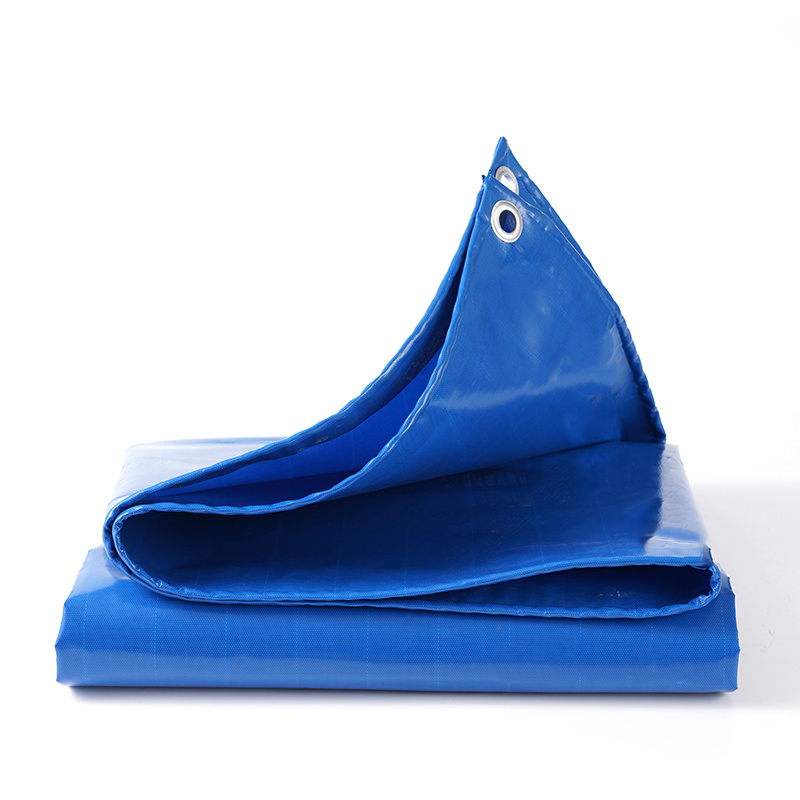
We must operate under a transparent assumption: polyvinyl chloride is not universally optimal for every single use case. Selecting the right fabric means understanding exact commercial fit. Let us compare it against common alternatives.
Polyethylene remains highly cost-effective and extremely lightweight. You will often see PE used for blue hardware store tarps. It works well for temporary coverage under 12 months. However, PE lacks strong abrasion resistance. UV light degrades it rapidly, causing it to flake and shatter. You must upgrade to polyvinyl chloride for multi-year, high-abrasion commercial applications.
Traditional cotton canvas dominated the industry for decades. Canvas offers natural breathability. This airflow prevents internal condensation from ruining covered equipment. Unfortunately, canvas absorbs significant water weight during rainstorms. It also rots over time if stored away damp. Polyvinyl chloride is strictly non-breathable. It traps internal moisture, but it offers absolute moisture blocking from the outside. It never rots.
TPU represents an emerging premium alternative. It offers superior eco-friendliness because it contains no plasticizers. TPU also maintains extreme flexibility in sub-zero temperatures. Despite these amazing benefits, TPU comes at a significant cost premium. For large-scale industrial coverage, polyvinyl chloride remains the most pragmatic, budget-conscious choice.
Table: Material Comparison for Commercial Outdoor Covers
Feature | PE (Polyethylene) | Canvas (Cotton) | PVC (Polyvinyl Chloride) | TPU (Polyurethane) |
|---|---|---|---|---|
Longevity | Short (6-12 months) | Medium (2-4 years) | Long (3-10 years) | Very Long (5-10+ years) |
Waterproof Rating | Moderate (Degrades) | Low (Absorbs water) | Absolute (Impervious) | Absolute (Impervious) |
Breathability | None | High | None | None |
Cost at Scale | Very Low | Moderate | Moderate | Very High |
Procurement teams often struggle to compare competing fabric quotes. You cannot simply select the lowest price. You must evaluate specific engineering criteria to ensure the fabric survives your exact environmental conditions. Consider these four critical metrics.
Weight and Thickness Scaling (GSM):
Manufacturers measure fabric weight in Grams per Square Meter (GSM). Commercial fabrics typically span the 400 GSM to 900+ GSM spectrum. A 400 GSM fabric works well for light industrial covers and equipment shrouds. Heavy transport and architectural membranes require 900 GSM material. Remember, heavier does not always mean better. Heavy GSM fabrics become stiff and difficult to fold. You must balance required tear strength against daily handling flexibility.
UV Stabilization & Thermal Limits:
Sunlight aggressively attacks plastics. UV rays cause a phenomenon known as plasticizer migration. The chemicals keeping the vinyl flexible slowly evaporate. The fabric then becomes stiff, brittle, and prone to cracking. High-quality variants incorporate UV resistance additives to slow this process. Furthermore, you must evaluate cold-crack resistance ratings. Verify the stated operating window. A standard industrial cover should survive from -30°C to +70°C without mechanical failure.
Flame Retardancy & Compliance:
Commercial staging, construction sites, and public events carry strict safety regulations. Basic plastics burn rapidly and drip dangerous molten residue. You must specify flame-retardant chemistry for public deployments. Check manufacturer data sheets for vital industrial certifications. Look for codes like NFPA 701 (US standard) or DIN 4102 B1 (European standard). These certifications prove the fabric will self-extinguish when exposed to direct flames.
Surface Finishes:
Raw vinyl attracts dust, dirt, and pollution. Over time, environmental grime bonds to the surface, making it look terrible. Premium suppliers apply an acrylic lacquer topcoat over the vinyl layer. You can choose a gloss or matte finish. This acrylic layer seals the microscopic pores of the plastic. It provides a self-cleaning, anti-wicking mechanism. Rainwater simply washes the dirt away, reducing maintenance on long-term installations.
Buying raw yardage and fabricating your own covers introduces unique operational risks. Sourcing PVC tarpaulin rolls requires careful planning to avoid massive material waste and compromised performance.
You cannot treat heavy vinyl like typical textiles. As previously mentioned, traditional needle stitching completely compromises the waterproof barrier. While you can apply seam tape over stitches, this method rarely survives long-term outdoor abrasion. For true structural seams, high-frequency (HF) welding or hot-air welding remains absolutely mandatory. HF welding uses electromagnetic energy to excite the plastic molecules. The layers melt and fuse together permanently. The welded seam actually becomes stronger than the surrounding fabric. You must ensure your fabrication partners possess the correct welding equipment before placing bulk orders.
Raw rolls come in specific widths, typically ranging from 1.5 meters to 3.2 meters. When designing custom covers, calculate roll width compatibility against your final dimensions. Poor planning leads to excessive offcuts. Furthermore, forcing unnecessary seams to save fabric creates aesthetic issues and adds labor costs. Optimize your cutting patterns to minimize waste and reduce the total number of structural weld lines.
Modern procurement demands strict environmental compliance. Older vinyl formulations often relied on heavy metals like lead or toxic phthalates to achieve flexibility. You must navigate current REACH and RoHS compliance standards. Demand documentation proving the material remains free of banned heavy metals. Additionally, understand that fresh vinyl exhibits off-gassing. During the first few weeks of deployment, the fabric releases a distinct chemical odor. Ensure adequate ventilation if using these covers in semi-enclosed industrial spaces.
Different industries inflict unique stresses upon outdoor covers. You must match the material specification directly to the primary environmental threat.
Highway transport introduces severe aerodynamic stress. Truck tarps and lumber wraps flap violently at highway speeds. This constant vibration destroys weak fabrics rapidly. Transport applications require maximum tear resistance. Specify a 600–900 GSM material featuring a high-density polyester scrim. Ensure the fabric incorporates heavy acrylic top-coating to resist diesel exhaust stains and road grime.
Agricultural environments expose covers to harsh chemicals, fertilizers, and animal waste. Grain covers and farm pond liners demand supreme chemical resistance. You also need exceptionally high UV stability since these covers bake in direct sunlight for months. Most importantly, specify non-toxic, food-safe formulations if the cover physically contacts agricultural yields or livestock drinking water.
Scaffolding enclosures and temporary roofing face unique challenges. They must endure falling debris and sharp tools. Strict flame retardancy is non-negotiable for site safety compliance. Furthermore, opaque covers plunge construction sites into darkness, forcing costly artificial lighting usage. Consider specifying translucent fabric options. These specialized variants block water and wind while allowing natural sunlight transmission, significantly reducing internal site lighting costs.
Selecting the right heavy-duty cover fundamentally protects your operational continuity. A systematic approach prevents catastrophic material failures in the field. Keep these final recommendations in mind as you move forward.
Apply Shortlisting Logic: Base your final material selections on the intersection of required lifespan, environmental extremes, and available fabrication capabilities. Do not over-specify GSM if flexibility is your primary requirement.
Verify Technical Data: Avoid purchasing based solely on a listed weight. Always request comprehensive Material Safety Data Sheets (MSDS).
Analyze Mechanical Metrics: Demand specific Technical Data Sheets (TDS) detailing exact tear strength, tensile strength, and cold-crack thresholds.
Test Before Scaling: Order physical samples. Test their welding compatibility on your specific shop equipment before committing to bulk roll orders.
A: A high-quality cover typically lasts between 3 and 10 years in continuous outdoor environments. The exact lifespan depends heavily on intense UV exposure, the specific GSM thickness, and the quality of the acrylic top-coating used to protect the underlying plasticizers.
A: Yes. You can repair small punctures on-site using specialized vinyl cement and commercial patch kits. However, for large structural tears, field patching remains temporary. You must return the cover to a professional fabricator for permanent heat-welding to restore total strength.
A: No. The material is completely non-breathable, which means it will trap internal moisture. You must design physical venting solutions, such as mesh airflow flaps, into your custom cover design to prevent trapped condensation and subsequent mold growth on your protected assets.
A: It can. Repeatedly folding the fabric in the exact same spot, especially in extreme cold, causes crease-cracking over time. To prevent mechanical damage, you should practice proper roll-storage methods or specify specialized cold-crack resistant chemical formulations for winter use.


