


Author: Site Editor Publish Time: 2026-09-18 Origin: Site
In heavy-duty applications, a PVC tarpaulin is only as strong as its weakest point—the seam. You can source the thickest, most durable base fabric available on the market today. However, if the panel joints fail, the entire protective cover becomes useless. Inadequate seam sealing leads directly to moisture ingress. This exposes your valuable physical assets to rust, rot, and severe structural degradation.
Premature material failure in harsh industrial environments almost always traces back to poor seam construction. Constant wind loads, heavy rainfall, and prolonged UV exposure ruthlessly test these vulnerable junctions. Therefore, understanding exactly how manufacturers seal waterproof PVC tarpaulin fabric remains a critical evaluation step. Procurement teams must scrutinize these underlying methods before ever committing to bulk purchases or custom fabrication contracts. Knowing the mechanics behind true waterproof seams empowers you to choose solutions built for absolute reliability.
Industrial-grade PVC tarpaulin relies on thermal or molecular bonding (welding), not traditional stitching, to achieve true waterproof seams.
High-Frequency (HF) welding, Hot Air welding, and Hot Wedge welding are the three industry-standard commercial sealing methods.
Procurement teams should evaluate seam quality based on shear strength, peel resistance, and environmental resilience rather than upfront unit cost alone.
Glued or taped-stitched seams present high failure risks for long-term outdoor industrial applications.
Cutting and joining large rolls of waterproof industrial PVC tarpaulin inherently disrupts its continuous protective polymer coating. Manufacturers must slice large master rolls into precise panels to fabricate complex shapes like truck curtains or dome tents. This necessary cutting process exposes the inner polyester base mesh, commonly called the scrim. Creating joints between these panels introduces natural vulnerabilities along every edge.
If water breaches these edges, capillary action immediately pulls moisture deep into the inner fibers. Once moisture enters the core matrix, mold thrives, and the fabric slowly delaminates from the inside out. Structural vulnerability at the seam drastically reduces the operational lifespan of the entire product.
The operational costs tied to seam leaks escalate quickly. Consider a temporary warehouse shelter leaking directly onto sensitive electronics during a sudden storm. Moisture ruins expensive inventory instantly. In long-haul transportation, compromised cargo coverings lead to severe financial penalties and rejected deliveries. Beyond direct inventory loss, organizations face sudden downtime, emergency replacement logistics, and serious reputational damage.
The ultimate goal of commercial manufacturing is true, irreversible sealing. A successful seam occurs when two overlapping pieces of PVC coated waterproof fabric merge perfectly. They must become a single, homogenous layer through complete molecular integration. When manufacturers execute this correctly, the seam actually becomes thicker and stronger than the surrounding standalone fabric.
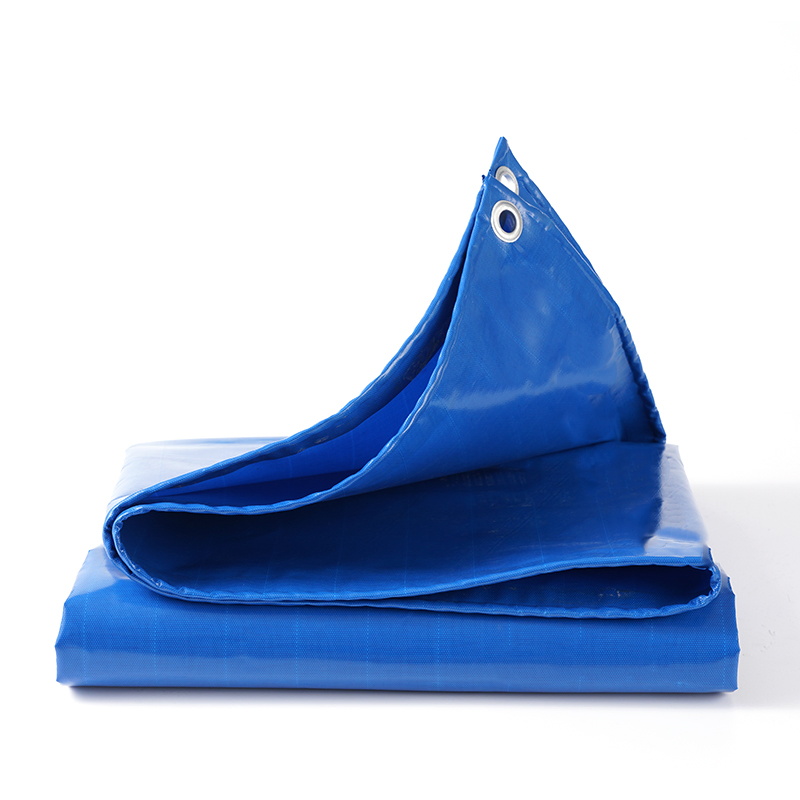
High-Frequency welding, often called RF welding, represents the pinnacle of fabric joining technology. This method uses focused electromagnetic energy to rapidly excite the molecules inside the PVC polymers. As these molecules vibrate at extreme speeds, they generate intense internal friction. This friction melts the material seamlessly from the inside out while heavy mechanical dies apply downward pressure.
The business outcome is unmatched reliability. HF welding produces the strongest, most aesthetically clean, and reliable air-tight seals available. Because the heat generates internally, the outer surfaces never scorch or degrade. Industries heavily rely on HF welding for zero-tolerance applications. We typically see this method specified for architectural tension tents, hazardous fluid containment bladders, and heavy-duty marine covers. It guarantees absolute watertight integrity under extreme stress.
Hot Air welding operates on a simpler, highly effective mechanical principle. Specialized automated machines inject precisely heated air directly between two overlapping fabric layers. Immediately following the heat injection, heavy pressure rollers squeeze the molten polymer surfaces together, fusing them instantly.
This method delivers exceptional speed and scalability. Manufacturers utilize hot air systems to produce continuous, long, straight seams efficiently. You will commonly find hot air seams on massive truck tarps, large agricultural covers, and extensive scaffolding enclosures. However, successful hot air welding requires strict manufacturer calibration. Operators must carefully balance temperature, machine speed, and roller pressure. Under-heating creates disastrously weak bonds. Over-heating causes irreversible scorch damage, fundamentally weakening the base fabric.
Hot Wedge welding shares similarities with hot air systems but uses direct physical contact rather than blown air. The machine pulls the two fabric layers over a heated, wedge-shaped metal track. Once the wedge melts the inner surfaces, synchronized pressure rollers compress the layers to form a permanent bond.
This technique offers phenomenal consistency and precise temperature control. Hot wedge machines run quietly and minimize hazardous smoke emissions during large-scale production. It serves as an excellent manufacturing choice for much thicker industrial fabric variants. Facilities often prefer hot wedge welding when assembling heavy geomembranes or rigid industrial curtains, as the direct heat transfer penetrates thick layers highly efficiently.
Procurement teams must remain cautious regarding traditional stitching and chemical adhesives. Stitching fundamentally relies on punching thousands of needle holes directly through the waterproof coating and the base scrim. Every single hole represents a guaranteed entry point for moisture. While manufacturers attempt to seal these holes using seam tape, the tape inevitably peels away over time.
Chemical gluing presents equally serious risk factors. Adhesives degrade rapidly under intense UV exposure and extreme temperature fluctuations. Summer heat softens industrial glues, while winter freezing makes them brittle and prone to cracking. Glued joints consistently fail rigorous commercial durability tests. They simply cannot meet true long-term waterproof requirements for outdoor deployment.
Suppliers often claim their seams are "indestructible," but verifiable data matters most. You must evaluate joints based on two specific engineering metrics: shear strength and peel strength.
Shear strength testing pulls the welded seam in parallel opposite directions. It tests how well the overlap handles lateral tension, mimicking the strain of a tightly strapped truck cover. Peel strength testing pulls the fabric apart at an acute angle, attempting to separate the layers like peeling a banana. Welded seams usually handle shear stress flawlessly, but peel strength reveals the true molecular bond quality.
Demand that your manufacturing partners provide documented testing data based on internationally recognized ISO or ASTM standards. Comparing these specific numbers removes marketing fluff from your procurement decisions.
Table: Comparing Seam Strength Metrics
Metric Type | Testing Mechanism | Real-World Application Standard | Failure Indicator |
|---|---|---|---|
Shear Strength | Parallel pulling force along the fabric plane | Wind loads, tight strapping tension | Base fabric tears before the seam breaks |
Peel Strength | Angular pulling force separating layers | Flapping corners, improper handling | Seam cleanly separates (indicates poor weld) |
The physical width of the welded overlap plays a massive role in overall longevity. Standard industrial seam widths typically range from 30mm to 50mm. A wider seam distributes mechanical stress and heavy wind loads across a much larger surface area. Narrow seams concentrate stress, creating highly localized failure points during storms.
Beyond width, buyers must verify total scrim encapsulation. When manufacturers cut panels, the inner polyester yarn exposes itself along the raw edge. A premium welding process melts enough liquid PVC to flow over and completely seal this raw edge. If the yarn remains exposed, capillary action will wick water straight into the cover. Always physically inspect edge encapsulation on supplier samples.
Outdoor covers face brutal thermal cycles. Extreme weather forces materials to expand during blistering afternoons and contract during freezing nights. Welded seams possess a distinct structural advantage here. Because the welded joint consists of the exact same polymer molecules as the rest of the sheet, it expands and contracts at the exact same rate.
Conversely, rigid chemical adhesives or thick threads expand at entirely different rates than the surrounding PVC. This thermal mismatch creates massive internal stress. Over mere months, this friction causes micro-tears along the stitched or glued boundary. Proper thermal welding eliminates these micro-tears entirely, ensuring decades of environmental resilience.
Aligning the correct manufacturing technique with your operational environment prevents unnecessary spending while guaranteeing performance.
Heavy-Duty & Fluid Containment: We strongly recommend High-Frequency (HF) welding for zero-tolerance applications. If you operate biogas bladders, chemical containment booms, or heavy marine covers, you cannot risk a single microscopic leak. HF welding provides the absolute certainty required for hazardous or highly sensitive containment.
Logistics & Agriculture (Large Scale): We recommend Hot Air or Hot Wedge welding for massive, repetitive shapes. Truck curtains, giant haystack covers, and commercial scaffolding enclosures demand cost-efficiency at scale. Hot air and wedge methods deliver this speed without sacrificing core waterproofing integrity.
Following a strict shortlisting logic protects your investment. Before finalizing bulk procurement contracts, implement these exact evaluation steps:
Request specific physical seam samples from all shortlisted manufacturers.
Perform aggressive manual peel tests in your office using pliers to test layer adhesion.
Verify the exact millimeter width of the proposed overlap.
Ask suppliers to produce their machine calibration logs and quality control procedures.
Buyers who proactively perform these checks avoid disastrous field failures down the line.
The fundamental integrity of a protective cover relies entirely on the precision of its welded seams. Sourcing excellent base materials only solves half the engineering equation. Without high-quality thermal or molecular bonding, structural joints remain vulnerable to moisture, wind, and eventual failure. Understanding the distinct differences between HF, Hot Air, and Hot Wedge welding allows organizations to make highly informed purchasing decisions.
Your next steps involve changing how you communicate with fabricators. Encourage your procurement buyers to immediately shift conversations away from basic "price per square meter" metrics. Instead, focus discussions purely on "seam strength specifications and welding technology." Requesting physical samples, demanding ISO testing data, and verifying edge encapsulation will drastically improve your asset protection strategies over the long term.
A: Only if heavily seam-taped, but it remains inferior to thermal welding for industrial longevity. Needles puncture the waterproof coating and inner mesh. While tapes temporarily block water, UV exposure and thermal expansion eventually cause tapes to peel, leading to inevitable leaks.
A: Typically 1.5 to 2 inches (40-50mm), depending heavily on the GSM of the fabric and the intended wind load. Heavier industrial covers require wider overlaps to distribute intense mechanical tension and prevent sheer failure during severe weather events.
A: Yes, using handheld hot air welders or specialized industrial PVC cements as a temporary stopgap. Maintenance teams can patch minor separations on-site to protect assets immediately, though original factory welding always remains structurally superior and more reliable.


