


Author: Site Editor Publish Time: 2026-02-14 Origin: Site
Superior Resistance to Moisture, Chemicals, and Harsh Environments
Cost Efficiency and Lifecycle Value in Industrial Applications
Versatility Across Industrial Use Cases and Product Categories
In modern industrial manufacturing and infrastructure development, material selection directly determines product lifespan, operational safety, and total cost of ownership. 100% Polyester Fabric has emerged as a foundational textile solution across multiple industrial sectors due to its balanced combination of mechanical strength, environmental resistance, and processing flexibility. Unlike blended or natural fibers, polyester delivers predictable performance under demanding conditions, making it especially suitable for applications where reliability is non-negotiable. This article focuses on the top advantages that make 100% Polyester Fabric a strategic choice for industrial use, analyzing its performance from durability and environmental resistance to cost efficiency and scalability.
One of the most critical advantages of 100% Polyester Fabric in industrial use is its outstanding durability. Polyester fibers exhibit high tensile strength, allowing fabrics to withstand repeated mechanical stress without tearing or deforming. This makes the material inherently Heavy duty, ideal for environments where abrasion, tension, and load-bearing are daily realities.
In industrial settings such as construction sites, logistics operations, and manufacturing plants, fabrics are frequently exposed to friction, sharp edges, and constant handling. 100% Polyester Fabric maintains structural integrity far better than many natural fibers, which tend to weaken over time. Its resistance to stretching under load ensures consistent performance in applications like belts, covers, and industrial curtains.
Another key durability factor is fatigue resistance. Polyester fibers recover well after repeated stress cycles, which significantly extends service life. For industries aiming to reduce downtime and replacement frequency, this durability translates directly into operational efficiency and cost savings.
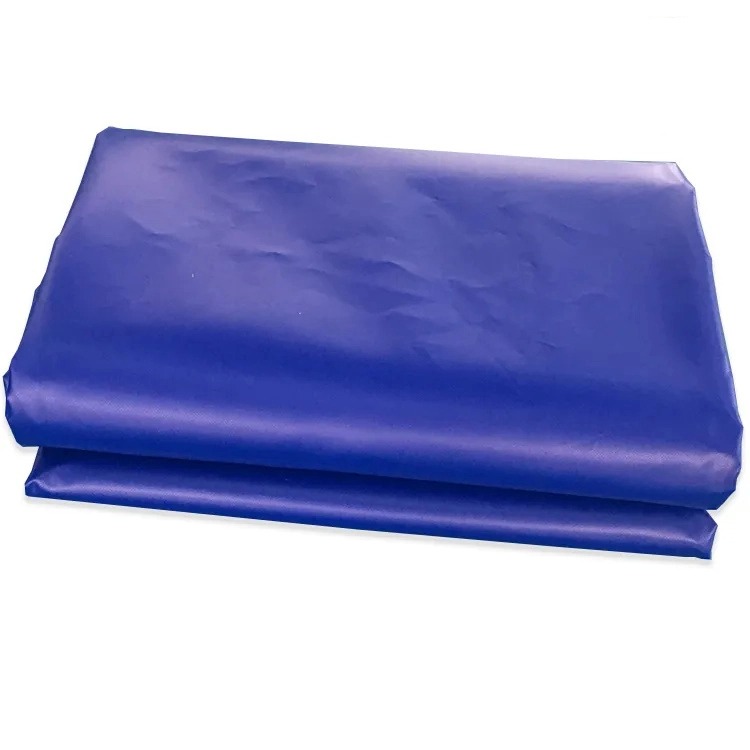
Industrial environments rarely offer ideal conditions, and materials must perform reliably despite exposure to moisture, chemicals, and fluctuating temperatures. 100% Polyester Fabric excels in this area due to its hydrophobic fiber structure. It naturally resists water absorption, making it highly effective in Waterproof or water-resistant fabric systems when combined with coatings or laminations.
This low moisture absorption also enables excellent Moisture wicking behavior in certain engineered constructions, preventing water retention that could otherwise lead to mold, mildew, or material degradation. In outdoor or semi-outdoor industrial environments, this property becomes essential.
Polyester is also chemically stable. It resists many acids, solvents, and industrial chemicals that would rapidly degrade natural fibers. Additionally, UV resistant performance ensures that prolonged exposure to sunlight does not significantly compromise fabric strength, making 100% Polyester Fabric well-suited for outdoor gear, protective covers, and long-term exterior installations.
Dimensional stability is a decisive factor in industrial fabric selection, especially for applications requiring precise fit and consistent performance. 100% Polyester Fabric demonstrates excellent resistance to shrinkage, stretching, and warping, even under varying environmental conditions.
Unlike cotton or other natural fibers that may expand when wet and contract when dry, polyester maintains its original dimensions. This stability is critical for engineered textile products such as filtration media, industrial linings, and for Industrial Tarpaulins, where even minor dimensional changes can compromise functionality.
Thermal stability further strengthens its appeal. Polyester can tolerate a wide range of operating temperatures without losing structural integrity, ensuring consistent performance in both cold storage and high-heat industrial zones. This predictable behavior simplifies product design, reduces tolerance-related failures, and enhances overall system reliability.
While initial material cost is always a consideration, industrial buyers increasingly prioritize total lifecycle value. 100% Polyester Fabric delivers a strong balance between upfront affordability and long-term economic efficiency.
Its durability and resistance to environmental degradation significantly reduce replacement frequency. Lower maintenance requirements also contribute to cost savings, as polyester does not require specialized treatments to maintain performance. Additionally, reduced failure rates help minimize production interruptions and associated labor costs.
The following table illustrates a simplified comparison of lifecycle performance between 100% Polyester Fabric and common alternative materials:
| Performance Factor | 100% Polyester Fabric | Natural Fiber Fabrics |
|---|---|---|
| Service Life | Long-term, consistent | Shorter, variable |
| Moisture Resistance | High | Low to moderate |
| Maintenance Needs | Minimal | Frequent |
| Dimensional Stability | Excellent | Limited |
| Cost Over Time | Lower | Higher |
This combination of durability, stability, and low maintenance makes polyester a financially sound option for large-scale industrial deployment.
Another major advantage of 100% Polyester Fabric is its exceptional versatility. It can be engineered into a wide range of fabric constructions, weights, and finishes, allowing it to meet the specific demands of diverse industrial applications.
From reinforced textiles used for Industrial Tarpaulins to lightweight yet strong materials for outdoor gear, polyester adapts easily without sacrificing core performance attributes. Its compatibility with coatings, laminates, and functional treatments expands its usability across sectors such as transportation, agriculture, energy, and warehousing.
This adaptability reduces the need for multiple material types within a single operation. Standardizing on 100% Polyester Fabric simplifies procurement, inventory management, and quality control, while still supporting varied functional requirements across different product lines.
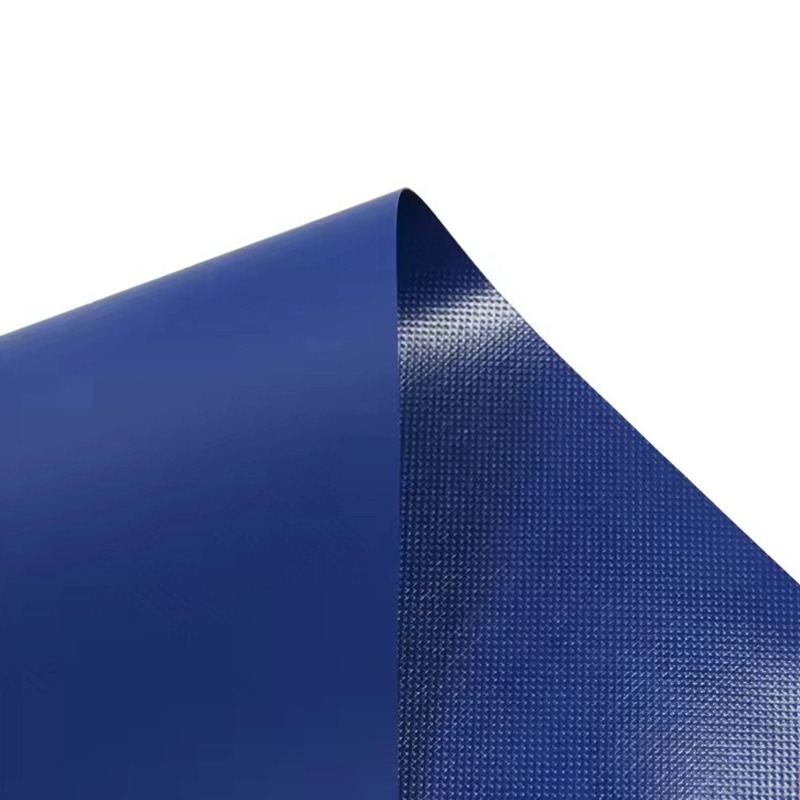
From a manufacturing perspective, 100% Polyester Fabric offers significant processing advantages. It performs consistently during weaving, knitting, dyeing, and finishing processes, resulting in predictable outcomes and reduced production waste.
Polyester readily accepts functional coatings that enhance Waterproof, UV resistant, or chemical-resistant properties. It can also be heat-set to improve dimensional stability or surface-treated to adjust friction, flexibility, or breathability. These customization options enable manufacturers to fine-tune fabric performance without changing the base material.
Additionally, polyester’s uniform fiber structure supports high repeatability in mass production. This reliability is crucial for industrial buyers who require consistent specifications across large volumes and extended production timelines.
Industrial projects often demand large quantities of fabric with uniform quality over extended periods. 100% Polyester Fabric meets this requirement through its globally established production infrastructure and stable raw material supply.
Because polyester is synthetically produced, manufacturers can tightly control fiber characteristics such as strength, denier, and finish. This consistency ensures that each production batch meets the same performance standards, reducing variability-related risks in industrial applications.
Scalability is another strategic advantage. Whether for pilot projects or full-scale industrial rollouts, 100% Polyester Fabric can be supplied reliably without compromising quality or lead times. This makes it an ideal material for long-term industrial planning and expansion.
Across durability, environmental resistance, dimensional stability, cost efficiency, and scalability, 100% Polyester Fabric consistently proves its value in industrial use. Its ability to perform reliably under harsh conditions while offering flexibility in design and processing makes it a cornerstone material for modern industrial textiles. For organizations seeking a dependable, high-performance fabric solution that supports both operational efficiency and long-term value, 100% Polyester Fabric stands out as a strategic and future-ready choice.
Q1: Why is 100% Polyester Fabric preferred for industrial applications?
Because it offers a combination of Heavy duty strength, moisture resistance, dimensional stability, and long service life that industrial environments require.
Q2: Is 100% Polyester Fabric suitable for outdoor industrial use?
Yes. Its UV resistant properties and low moisture absorption make it highly suitable for outdoor gear, covers, and exterior installations.
Q3: Can 100% Polyester Fabric be made waterproof?
Absolutely. Polyester works exceptionally well with coatings and laminations to achieve Waterproof performance for industrial protection needs.
Q4: How does polyester compare to natural fibers in industrial settings?
Compared to natural fibers, 100% Polyester Fabric offers better durability, lower maintenance, superior environmental resistance, and more predictable long-term performance.


