


Author: Site Editor Publish Time: 2026-03-16 Origin: Site
Choosing the right PVC Tarpaulin for industrial use involves much more than picking a thick fabric. In heavy-duty industries—ranging from logistics and agriculture to construction—a tarp is often the only thing standing between valuable assets and total destruction. Whether it is shielding a multi-million dollar construction site from a storm or protecting perishable goods during transit, the quality of the material matters immensely.
This guide explores the ten essential features that professional buyers must prioritize. We move beyond basic descriptions to provide expert insights into High tensile strength fabrics, Fire retardant coatings, and the technical nuances of Waterproof seals. By the end of this article, you will have a comprehensive checklist to ensure your next investment in heavy duty PVC Tarpaulin delivers maximum longevity and safety.
In industrial settings, a tarp is constantly under stress. Wind loads, tight tie-downs, and physical abrasion can quickly destroy a low-quality cover. Therefore, High tensile strength is the most critical mechanical property to evaluate. This metric tells you how much force the PVC Tarpaulin can withstand before it stretches or snaps.
The strength of a PVC Tarpaulin comes from its inner polyester "scrim" or mesh. Manufacturers measure this using "denier"—the weight of the yarn. A heavy duty industrial tarp usually features a 1000D or higher polyester weave. Experts also look for the "weave density," such as 20x20 or 30x30 per square inch. A higher density means the material won't easily puncture when stretched over sharp equipment corners.
Tear resistance is different from tensile strength. It measures how easily an existing small cut will grow under tension. A High tensile strength tarp should also feature a "ripstop" weave. This localized reinforcement prevents a minor snag from becoming a catastrophic split across the entire cover. When comparing quotes, always ask for the "Grab Strength" and "Tongue Tear" test results to verify the material's durability.
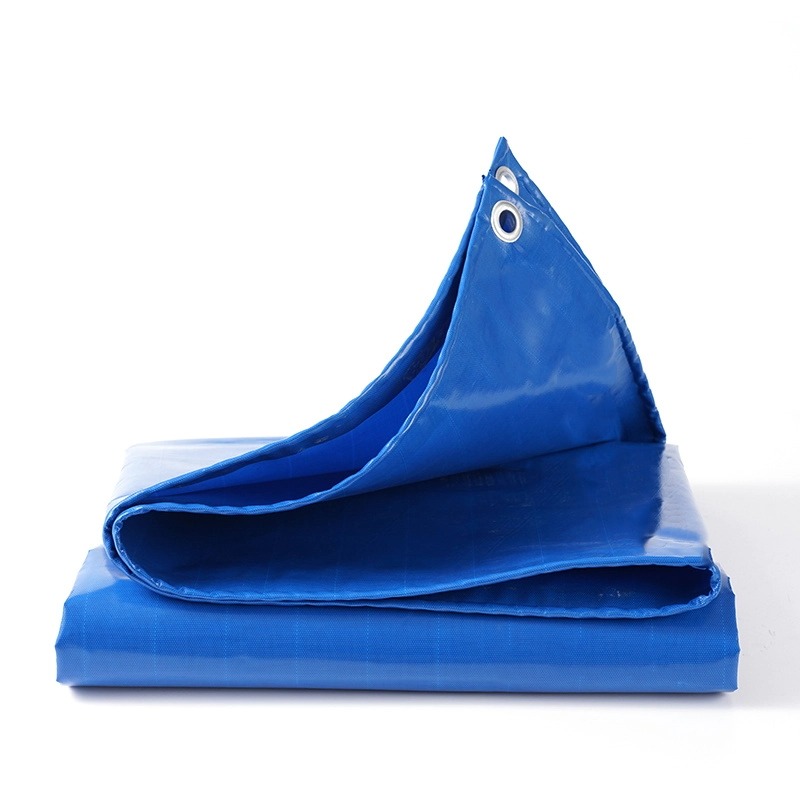
The primary reason to buy a PVC Tarpaulin is usually moisture protection. However, being "water-resistant" is not the same as being truly Waterproof. In high-pressure environments, like heavy rainfall or high-speed trucking, water can actually be forced through the pores of a sub-par fabric.
A Waterproof PVC Tarpaulin should have a high hydrostatic head rating. This measures the height of a water column the fabric can support before moisture seeps through. For industrial covers, we recommend a rating of at least 10,000mm. This ensures that even in a tropical downpour, the equipment underneath stays bone-dry.
How the PVC is applied to the fabric matters for its Waterproof integrity.
Lamination: Cheaper and lighter, but the layers can peel over time.
Knife-Coating: This process spreads liquid PVC over the mesh, soaking into the fibers. It creates a much more Durable and Waterproof bond that won't delaminate under heat or pressure. For long-term outdoor use, always opt for knife-coated heavy duty options.
In many industrial zones, particularly construction and warehousing, using a Fire retardant PVC Tarpaulin is a legal requirement. These materials are treated with chemicals that prevent the tarp from becoming fuel for a blaze. Instead of catching fire, it should melt slowly or self-extinguish when the flame source is removed.
Buyers should look for specific international standards. Common ones include NFPA 701 in the USA, B1/B2 in Germany (DIN 4102), and M2 in France. A Fire retardant tarp provides critical time for workers to evacuate and prevents a localized spark (like from welding) from turning into a warehouse-wide disaster.
Some cheap tarps have a surface spray that washes off over time. A Premium PVC Tarpaulin, however, has fire-retardant additives mixed directly into the PVC compound during manufacturing. This ensures the protection lasts for the entire lifespan of the product, regardless of rain or sun exposure.
| Feature | Standard Requirement | Best Use Case |
| Tensile Strength | > 2500 N/5cm | Trucking, Scaffolding |
| Fire Retardancy | B1 or NFPA 701 | Construction, Events |
| UV Protection | 50+ UPF Rating | Agriculture, Storage |
| Waterproofing | 100% (Knife Coated) | Logistics, Marine |
Industrial tarps spend most of their lives under the sun. UV radiation is the "silent killer" of plastics. It breaks down the chemical bonds in the PVC, leading to cracking, fading, and "chalking."
A High-quality PVC Tarpaulin must contain UV stabilizers. These additives absorb or reflect harmful rays, preventing the material from becoming brittle. Without this, a heavy duty tarp might lose 50% of its strength in just one summer. Experts suggest looking for tarps that specify a 3-year to 5-year UV warranty for outdoor use.
For buyers in northern climates, thermal resistance is equally important. When temperatures drop below freezing, standard PVC can become stiff and shatter like glass when folded. A Premium tarp will have a "cold-crack" rating down to -30°C or even -40°C. This keeps the material Flexible and functional in the dead of winter.
While most industrial tarps are opaque (green, blue, or grey), certain applications require light transmission. This is where Clear transparent PVC Tarpaulin comes into play.
Clear transparent options are vital for:
Safety Curtains: Allowing workers to see through a partition in a factory.
Greenhouses: Providing weather protection while letting in sunlight.
Outdoor Construction: Keeping the rain out while allowing natural light for workers inside.
Achieving a Clear transparent finish often means removing the inner polyester mesh (which is opaque). This makes the material weaker. To compensate, a High-quality clear tarp uses a thicker PVC film or a "reinforced clear" design where a thin, wide-spaced mesh is visible but allows plenty of light through.
In a factory setting, a Clear transparent tarp can fog up due to temperature differences or attract dust through static. Experts look for tarps with anti-fog coatings and anti-static additives. These features ensure the view remains unobstructed, maintaining safety standards in high-traffic industrial zones.
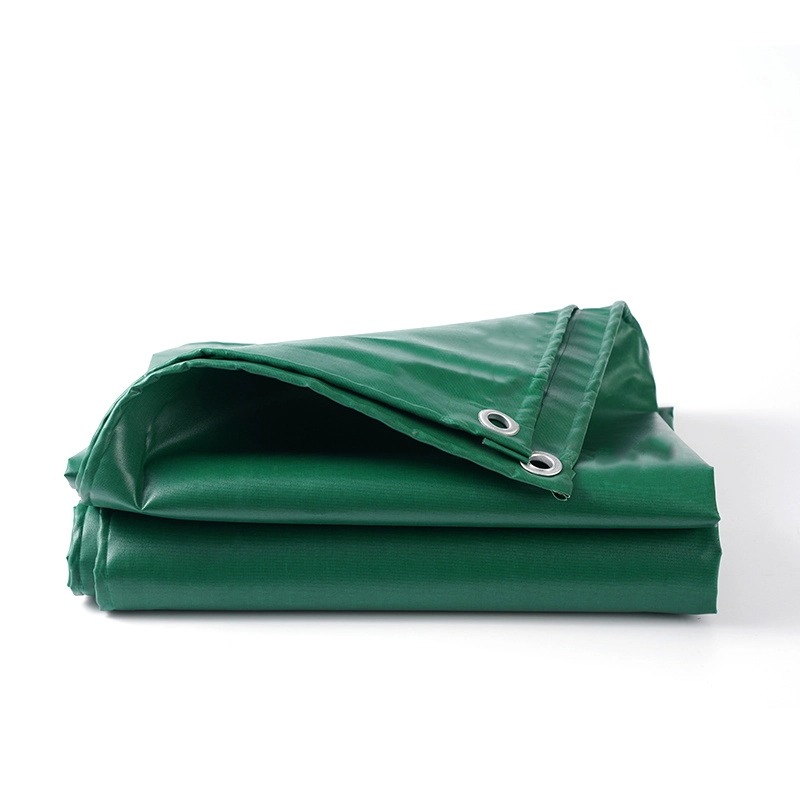
In the tarp world, weight is measured in Grams per Square Meter (GSM). While it’s tempting to think that "heavier is always better," a High-quality tarp focuses on the weight-to-performance ratio.
Light Duty (200-400 GSM): Good for temporary dust covers or light garden use.
Medium Duty (400-600 GSM): Suitable for standard truck covers and hay stacks.
Heavy Duty (650-900+ GSM): This is the "industrial" sweet spot. It offers the High tensile strength needed for long-haul trucking, oil-field equipment, and permanent architectural structures.
If a tarp is too heavy (e.g., 1200 GSM) for a simple application, it becomes difficult for workers to install. It might require cranes or multiple people to move. A Premium PVC Tarpaulin uses high-tenacity yarns to achieve extreme strength at a lower weight, making it more Flexible and easier to deploy without sacrificing protection.
The center of the PVC Tarpaulin rarely fails first. Instead, failures almost always start at the edges or the grommets (eyelets). If the "accessories" are weak, the whole tarp is useless.
Look for "heat-welded" or "high-frequency welded" hems rather than stitched ones. Stitching creates thousands of tiny holes that let in water. A welded hem is 100% Waterproof and significantly stronger. Furthermore, the hem should be reinforced with a "bolt rope" or a pp-webbing strap inside the fold for extra rip resistance.
In an industrial PVC Tarpaulin, grommets should be made of rust-proof materials like brass, stainless steel, or heavy-duty galvanized iron. They should be spaced every 18 to 24 inches. Some heavy duty tarps also feature reinforced plastic corners to distribute the stress from tie-down ropes more evenly.
In industrial and agricultural environments, tarps are often exposed to oils, acids, and organic matter. A standard fabric would rot or dissolve, but a High-quality PVC Tarpaulin acts as a barrier.
For use in the oil and gas industry, the PVC coating must be specially formulated to resist hydrocarbons. This prevents the material from softening or swelling when it comes into contact with fuel or lubricants.
When a tarp is folded while damp, mildew and mold can grow within hours. This not only smells bad but also weakens the fabric. A Premium tarp features an anti-fungal coating that prevents the growth of microbes, keeping the Waterproof surface clean and structurally sound even in humid storage conditions.
It might seem like an aesthetic choice, but the surface finish of a PVC Tarpaulin affects its performance and maintenance.
Glossy Finish: This is very smooth. It helps dirt and debris slide off with the rain. It is also easier to clean with a pressure washer.
Matte Finish: This provides a more "tactile" grip. If workers need to walk on the tarp (such as during roof installation), a matte finish provides better slip resistance.
Acrylic/PVDF Coatings: Some high-end tarps feature a "lacquer" on top of the PVC. This makes the tarp "self-cleaning" and prevents atmospheric pollutants from staining the material.
No matter how heavy duty a tarp is, accidents happen. A forklift might poke a hole in it, or a sharp piece of metal might cause a snag. The ability to repair the tarp is a major cost-saving feature.
PVC is a thermoplastic, which means it can be "re-melted." A High-quality PVC Tarpaulin can be repaired using a simple heat gun and a patch of the same material. The new patch bonds at a molecular level, restoring the Waterproof integrity.
Because it is so Durable, a repaired PVC tarp can often last for several more years. When buying, it is wise to ask the supplier if they provide repair kits. This ability to "fix instead of replace" makes PVC a more sustainable and economical choice for long-term industrial projects.
Finding the perfect PVC Tarpaulin requires a balance of mechanical strength, safety certifications, and environmental resistance. By prioritizing features like High tensile strength, Fire retardant ratings, and UV stability, you ensure that your assets are protected by the best technology available. Whether you need a Clear transparent curtain for a workshop or a heavy duty cover for a fleet of trucks, using this 10-point checklist will lead you to a product that truly lasts.
Q1: How long does an industrial PVC Tarpaulin typically last?
A: Depending on UV exposure and mechanical stress, a High-quality tarp usually lasts 5 to 10 years. Knife-coated versions generally outlast laminated ones.
Q2: Is a thicker tarp always better?
A: Not necessarily. A 600 GSM tarp made with high-tenacity 1000D yarn can be stronger and more Durable than a 900 GSM tarp made with cheap, low-grade recycled materials. Look at the "Tensile Strength" rather than just the thickness.
Q3: Can I use a regular PVC tarp for indoor fire safety?
A: No. You must specifically verify it has a Fire retardant certification like NFPA 701 or B1. Standard PVC will catch fire and produce toxic smoke.
At our company, we operate a massive, state-of-the-art manufacturing facility dedicated to the art of the PVC Tarpaulin. We aren't just a supplier; we are a specialized factory equipped with high-frequency welding machines and advanced knife-coating lines. Our strength lies in our precision—every roll of heavy duty fabric we produce undergoes rigorous testing for High tensile strength and Waterproof reliability.
We take pride in our ability to customize solutions for B2B clients worldwide. Whether you need a specific Fire retardant grade or a Clear transparent finish with anti-static properties, we have the technical expertise to deliver. Our factory's large-scale capacity ensures we can handle massive orders while maintaining the strict quality control that industrial buyers demand. We believe in building products that stand up to the toughest elements on Earth, providing you with the peace of mind that comes from true manufacturing excellence.


