


Author: Site Editor Publish Time: 2026-07-05 Origin: Site
High-value cargo transit demands predictable material performance. Generic covers often fail during severe weather or heavy mechanical stress. These sudden failures trigger extensive cargo damage and heavy compliance fines. They also force frequent, disruptive replacement cycles across your logistics fleet. Procurement teams face a critical challenge. You must rigorously evaluate raw material specifications before ordering high-volume shipping containers. Doing this prevents disastrous product losses down the line. Selecting the right materials requires careful analysis. You must match base fabric density to specific logistical environments. You also need to align coating technology and specialized environmental treatments. We will explore exactly how to evaluate these essential components. You will discover the top five roll specifications for heavy transit. We will also guide you through supplier vetting to secure reliable inventory.
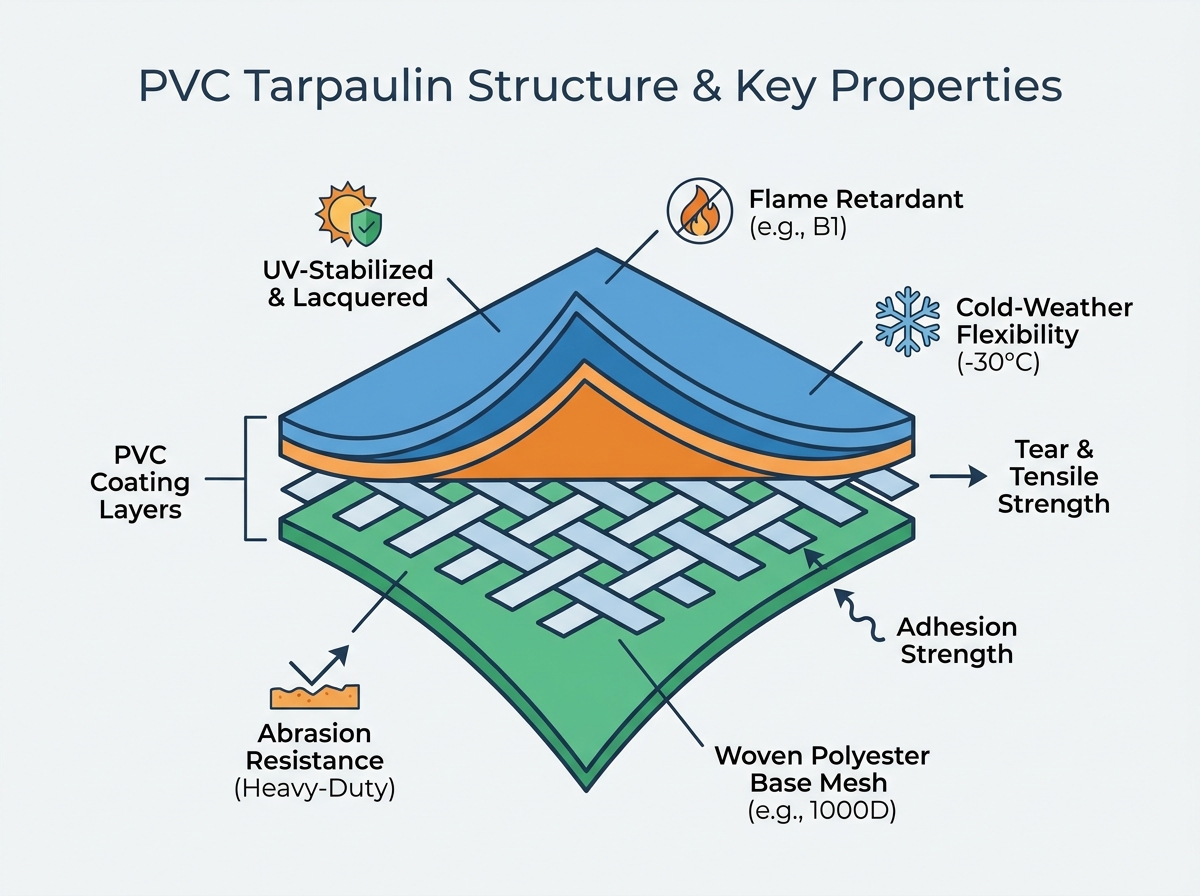
Base fabric yarn count and weave pattern dictate mechanical tear strength, while the PVC coating determines weatherproofing and chemical resistance.
Evaluating a wholesale double pvc roll requires verifying total GSM (grams per square meter) against actual application weight limits.
Regulatory compliance for specialized transit often mandates certified flame retardant pvc fabric and cold-crack resistant formulations.
Supplier vetting must prioritize verifiable testing data, transparent MOQs, and consistent roll width manufacturing to minimize fabrication waste.
Procuring reliable industrial woven tarpaulin requires looking beyond basic product descriptions. You must separate the base fabric capabilities from the exterior coating performance. Each layer serves a distinct mechanical purpose during transportation.
Assess the base polyester mesh independently from the exterior coating thickness. The internal mesh creates the structural backbone. Heavy-duty applications typically demand a 1000D x 1000D yarn configuration. Manufacturers often utilize a Panama weave. This specific weaving method weaves two yarns together simultaneously. It significantly increases mechanical tear resistance. High tear strength prevents small punctures from expanding into massive rips during high-speed transit.
Peel resistance dictates how firmly the liquid PVC bonds to the polyester mesh. High-speed wind sheer generates immense stress on cargo covers. Heavy mechanical vibration pulls constantly at the fabric surface. Poor adhesion causes the exterior coating to separate from the base mesh. This delamination immediately ruins waterproofing capabilities. We strongly recommend specifying knife-coated fabrics. Knife coating drives the liquid polymer directly into the yarn fibers. This creates a superior mechanical bond compared to standard hot-melt lamination.
You must distinguish between standard chemical formulations and specialized cold-crack resistance. Northern logistics routes subject fabrics to brutal freeze-thaw cycles. Standard plasticizers freeze and become brittle below zero degrees Celsius. This brittleness causes microscopic fractures across the fabric surface. Water seeps through these hidden fractures. Specialized cold-weather rolls incorporate unique chemical additives. These additives maintain polymer flexibility down to extremely low temperatures.
Bulk roll procurement requires strict attention to manufacturing consistency. You must identify pinholes, uneven coating weights, and edge-fraying risks early. Uneven coating creates weak points across the final fabricated cover. Pinholes allow insidious moisture ingress. Fraying edges complicate the subsequent high-frequency welding process. Consistent manufacturing ensures uniform performance across every linear meter.
Below is an essential material evaluation parameter comparison.
Application Environment | Recommended Mesh Density | Required Adhesion Method | Critical Testing Metric |
|---|---|---|---|
Standard Regional Freight | 500D x 500D | Hot-Melt Lamination | Basic Tensile Strength |
Extreme Northern Transit | 1000D x 1000D | Knife-Coated Liquid | Cold-Crack Flex Testing |
High-Wind Maritime Cargo | 1000D x 1000D (Panama) | Knife-Coated Liquid | Peel Resistance |
Specific transit environments demand specialized fabric architectures. We have categorized the top five material specifications based on their logistical performance capabilities.
Long-haul flatbed trucking destroys inferior materials rapidly. Heavy industrial equipment coverage requires maximum abrasion resistance. This specification utilizes double-sided knife-coated polymer over a highly dense woven core. The thick exterior layers deflect debris and resist sharp equipment edges. Procurement teams favoring a wholesale double pvc roll secure exceptional longevity. You avoid the constant replacement cycles common among standard 500gsm alternatives. However, users must account for the significant final weight. Drivers require specialized deployment systems for massive flatbed covers.
Hazardous material transit operates under strict international regulatory scrutiny. Rail freight networks and enclosed logistics hubs mandate aggressive fire safety compliance. You must specify formulations meeting DIN 4102 B1, NFPA 701, or equivalent international fire standards. A genuine flame retardant pvc fabric self-extinguishes upon removing the direct heat source. It prevents rapid fire spread across tightly packed rail yards. Always demand third-party laboratory certificates. Never accept unverified internal factory claims regarding fire safety compliance.
Northern logistics routes experience devastating extreme freeze-thaw environments. Standard polymers shatter like glass under these brutal conditions. A specialized bulk cargo cover tarp integrates advanced plasticizer additives. These chemical components guarantee fabric flexibility down to -30°C or -40°C. They prevent microscopic fractures during manual folding and unfolding. Procurement experts should request localized cold-chamber folding tests before finalizing bulk orders. This precaution prevents catastrophic material failures during deep-winter hauling operations.
Maritime cargo faces relentless high-sun exposure. Open-air storage environments subject fabrics to intense ultraviolet degradation. A premium woven pvc tarpaulin utilizes acrylic or PVDF surface lacquering. This topcoat blocks penetrating UV rays effectively. It also reduces environmental dirt adhesion significantly. The lacquer prevents interior plasticizers from migrating to the material surface. This migration usually causes a sticky, degraded exterior. Lacquering ensures the cover remains pliable and easy to clean over multiple years.
Daily-use logistics and LTL (Less-than-Truckload) covers prioritize handling speed. Weight-sensitive transportation systems cannot support massive 900gsm fabrics. This specification balances a high-yarn-count strength core against a much thinner exterior profile. The reduced weight significantly decreases driver fatigue during manual tarping operations. It provides adequate weatherproofing for short regional hops. You sacrifice some extreme abrasion resistance. However, you gain immense operational efficiency and faster turnaround times at loading docks.
Partnering with a reliable woven pvc tarpaulin wholesale supplier dictates your final product quality. Many market entities misrepresent their actual manufacturing capabilities.
You must verify whether a supplier actually controls the extrusion and coating process. Trading promoters merely buy and resell generic finished rolls. They lack direct control over base mesh weaving and chemical formulation. Direct manufacturers adjust plasticizer ratios and custom-weave base fabrics upon request. Request video tours of their specific coating lines. Ask detailed questions regarding their liquid knife-coating machinery. True manufacturers provide highly technical answers instantly.
Observe the key differences below in our Supplier Evaluation Matrix.
Assessment Area | Direct Manufacturer | Trading Promoter |
|---|---|---|
Custom Formulation | Available (Adjustable plasticizers) | Unavailable (Standard stock only) |
Technical Knowledge | Deep understanding of DIN/NFPA | Relies on third-party spec sheets |
Production Control | Owns weaving & coating lines | Outsources entirely |
Never accept undocumented in-house performance claims. Request independent laboratory reports for tensile strength, colorfastness, and flame retardancy. Reputable factories partner with globally recognized testing agencies like SGS or Intertek. They supply these compliance certificates willingly. Verify the batch numbers on these certificates match your proposed production run. Transparency builds trust and prevents compliance failures upon delivery.
Evaluate exact lead times and standard container load configurations carefully. Assess custom roll width availability specifically. Standard manufacturing lines typically offer widths between 1.5m and 3.2m. Ordering customized widths optimizes your subsequent cutting and welding processes. It eliminates unnecessary overlapping seams. Fewer seams mean stronger final covers and less wasted material. Discuss packing methods deeply. Hard-tube packaging prevents compression damage during rough transoceanic shipping.
Assess the risks and benefits of various inventory models. "Ready-to-ship" stock lots offer immediate availability. They suit urgent short-term projects perfectly. However, stock lots often feature inconsistent dye lots or varying age profiles. Custom-commissioned production runs require longer lead times. They guarantee uniform chemical formulation and consistent physical properties across the entire container. Choose your model based on your strict project deadlines and quality requirements.
Transitioning raw material rolls into finished logistical covers involves several operational variables. You must anticipate manufacturing challenges and handling limitations.
Inconsistent roll widths destroy your manufacturing yield. Edge curling forces fabricators to trim significant material before high-frequency welding. This trimming wastes expensive raw material. It also skyrockets manual labor hours. Uneven coating thickness creates weak spots along welded seams. A weak seam bursts open under transit wind pressure. Procuring dimensionally stable rolls minimizes this fabrication waste. It ensures a smooth, predictable assembly process on the factory floor.
You face a constant operational tradeoff regarding material density. Heavier GSM fabrics increase ultimate lifespan and abrasion resistance. They endure brutal industrial environments successfully. However, this heavy weight restricts manual handling capabilities. Logistics personnel struggle to deploy 900gsm covers across large flatbeds safely. Heavy covers increase physical injury risks during icy or windy conditions. You must balance extreme durability requirements against the physical realities of daily deployment.
Factoring replacement cycles requires analyzing specific transit lanes. Expected UV exposure dictates material degradation rates heavily. Mechanical wear varies wildly between enclosed rail freight and open-air flatbed trucking. Continuous sun exposure leaches plasticizers from unprotected materials. The fabric becomes stiff, brittle, and impossible to fold. Mapping your primary transit routes helps determine necessary UV and cold-weather treatments. This proactive approach prevents unexpected mid-transit material failures.
Sourcing bulk industrial textiles requires aligning specific chemical and mechanical properties with exact logistical demands. Generic materials fail quickly under severe transit stress. You must evaluate base yarn density, coating technologies, and specialized environmental treatments comprehensively. Prioritize suppliers demonstrating transparent testing protocols and robust manufacturing capabilities. Doing so ensures consistent quality and protects your valuable cargo assets.
Request A4-sized material samples: Conduct internal tactile and flexibility evaluations immediately upon receipt.
Verify third-party compliance certificates: Ensure documents align with recent production batches and specific regional safety regulations.
Conduct local high-frequency welding tests: Confirm the coating adhesion supports strong, reliable seams before committing to a full container load.
Audit custom roll width capabilities: Calculate exact dimensions to reduce your factory-floor fabrication waste.
A: Standard industry MOQs usually range between 2,000 and 3,000 linear meters per color and specification. Manufacturers require this volume to justify the extensive setup time required for custom chemical formulations and dedicated weaving line adjustments.
A: A double roll utilizes knife-coated liquid polymer adhesion. The liquid drives deeply into the mesh, creating extreme peel resistance and high durability. Hot-melt lamination uses heat to press pre-formed films onto the mesh. It costs less but remains highly prone to delamination under stress.
A: Yes. Most advanced production lines accommodate custom widths between 1.5m and 3.2m. Ordering exact dimensions eliminates redundant overlapping. This practice reduces factory fabrication waste and produces stronger final cargo covers with fewer vulnerable seams.
A: You must advise your supplier to provide specific independent test reports covering standard protocols like DIN 4102 B1, M2, or NFPA 701. Additionally, conduct a controlled, localized burn test on provided samples. Genuine material will self-extinguish immediately upon flame removal.


