


Author: Site Editor Publish Time: 2026-02-04 Origin: Site
Weather Resistance and Long-Term Durability of Industrial Textile
UV Stability and Colorfastness for Outdoor Industrial Textile Applications
Strength, Load-Bearing Capacity, and Heavy duty Industrial Textile Performance
Flame retardant and Heat resistant Industrial Textile Safety Requirements
Moisture, Mold, and Chemical Resistance in Industrial Textile for outdoor use
Environmental Responsibility: Biodegradable Industrial Textile and Sustainability
Outdoor environments place extreme and continuous stress on materials, far beyond what indoor applications demand. For Industrial Textile, exposure to sunlight, moisture, temperature fluctuations, mechanical load, and safety risks is not occasional—it is constant. As a result, performance requirements for outdoor applications are highly specialized and uncompromising.
This article focuses on the top 8 performance requirements for Industrial Textile in outdoor environments, breaking down the exact technical expectations that determine whether a textile succeeds or fails in real-world outdoor conditions. Each requirement directly addresses functional challenges faced in construction, infrastructure, agriculture, transportation, and protective systems where Industrial Textile for outdoor use must deliver reliability over long service lives.
Weather resistance is the foundation of outdoor performance. Rain, wind, frost, heat waves, and particulate pollution combine to accelerate material degradation. A high-performing Industrial Textile must retain structural integrity and functional properties despite years of continuous environmental exposure.
Durability is not only about fiber strength but also about resistance to hydrolysis, freeze-thaw cycles, and surface erosion. Textiles used outdoors often face micro-cracking caused by repeated moisture absorption and drying. Without proper formulation, this leads to reduced tensile strength and premature failure. Heavy duty Industrial Textile applications—such as architectural membranes or outdoor protective covers—require fibers and constructions designed to withstand constant mechanical stress under varying climate conditions.
A key durability benchmark is performance retention over time. Outdoor Industrial Textile must demonstrate minimal loss of strength, flexibility, and dimensional stability after prolonged weather exposure. This ensures predictable behavior, lowers replacement frequency, and reduces total lifecycle cost.
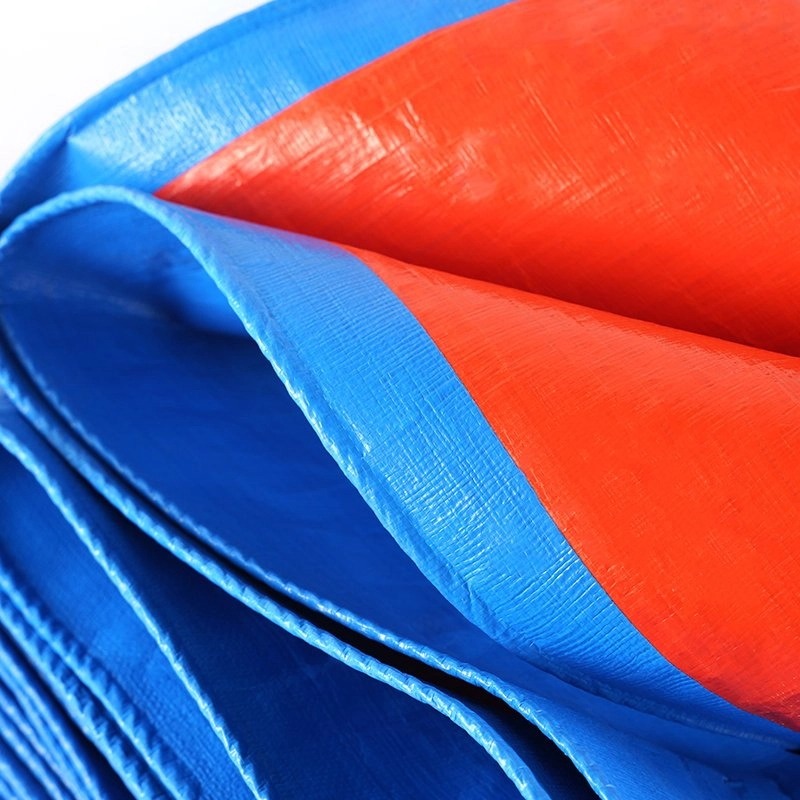
Ultraviolet radiation is one of the most destructive forces acting on outdoor materials. Prolonged UV exposure breaks down polymer chains, weakens fibers, and causes fading or discoloration. For Industrial Textile for outdoor use, UV stability is a critical performance requirement rather than an aesthetic preference.
UV-resistant Industrial Textile maintains tensile strength, tear resistance, and surface integrity even after years of sun exposure. Colorfastness also plays a functional role, especially in applications where visibility, signaling, or thermal performance depends on consistent coloration. Poor UV performance can lead to embrittlement, surface chalking, and reduced load-bearing capacity.
Effective UV stabilization strategies include fiber selection, additive integration, and protective coatings. When properly engineered, outdoor Industrial Textile can achieve long-term performance stability without sacrificing flexibility or strength, even in high-UV regions.
Mechanical strength defines the working limits of Industrial Textile in outdoor environments. Applications such as geotextiles, tensile structures, tarpaulins, and safety barriers require textiles that can handle sustained loads, sudden impacts, and repetitive stress.
Heavy duty Industrial Textile must exhibit high tensile strength, tear resistance, and abrasion resistance simultaneously. These properties are interdependent—high tensile strength without tear resistance often leads to catastrophic failure once damage begins. Outdoor use magnifies this risk due to wind load, debris impact, and ground contact.
The table below highlights key mechanical performance indicators relevant to outdoor Industrial Textile:
| Performance Metric | Functional Importance in Outdoor Use |
|---|---|
| Tensile Strength | Supports structural loads and tension |
| Tear Resistance | Prevents failure propagation |
| Abrasion Resistance | Extends lifespan under friction |
| Dimensional Stability | Maintains shape under stress |
Balancing these properties ensures that Industrial Textile performs reliably under demanding outdoor conditions without over-engineering or unnecessary material weight.
Fire safety is a non-negotiable requirement for many outdoor installations. Flame retardant Industrial Textile is essential in environments where ignition risks exist, such as construction sites, transportation infrastructure, and industrial facilities.
Outdoor textiles are often exposed to high temperatures, sparks, or radiant heat. Heat resistant Industrial Textile must maintain structural integrity and avoid dripping, melting, or rapid flame spread when exposed to elevated temperatures. This performance directly impacts evacuation safety, asset protection, and regulatory compliance.
Flame retardancy should be inherent or durably integrated, ensuring performance does not degrade after weathering or cleaning. In outdoor environments, where maintenance cycles are long, Industrial Textile must provide consistent fire performance throughout its service life rather than relying on temporary treatments.
Outdoor environments expose textiles to constant moisture, whether from rain, humidity, condensation, or ground contact. Moisture resistance is essential to prevent loss of mechanical strength, microbial growth, and unpleasant odors.
High-performance Industrial Textile for outdoor use resists water absorption while maintaining breathability where required. This balance prevents internal condensation and reduces the risk of mold and mildew formation, which can compromise both performance and hygiene.
Chemical resistance is equally important. Outdoor Industrial Textile may come into contact with oils, fertilizers, cleaning agents, or industrial pollutants. Resistance to chemical degradation ensures that fibers do not weaken, swell, or discolor under exposure. Together, moisture and chemical resistance protect long-term functionality in unpredictable outdoor settings.
Surface engineering significantly enhances outdoor performance. Coated Industrial Textile incorporates functional layers that improve resistance to water, UV radiation, abrasion, and chemicals without altering the textile’s core structure.
Coatings can also improve cleanability and reduce dirt adhesion, which is particularly important in outdoor applications exposed to dust and pollution. For Industrial Textile, coatings act as a first line of defense, shielding fibers from environmental stress while extending service life.
The effectiveness of a coating depends on adhesion, flexibility, and durability. Poorly bonded coatings crack or peel under outdoor conditions, negating their benefits. Well-engineered Coated Industrial Textile maintains performance under repeated flexing, temperature variation, and mechanical load.
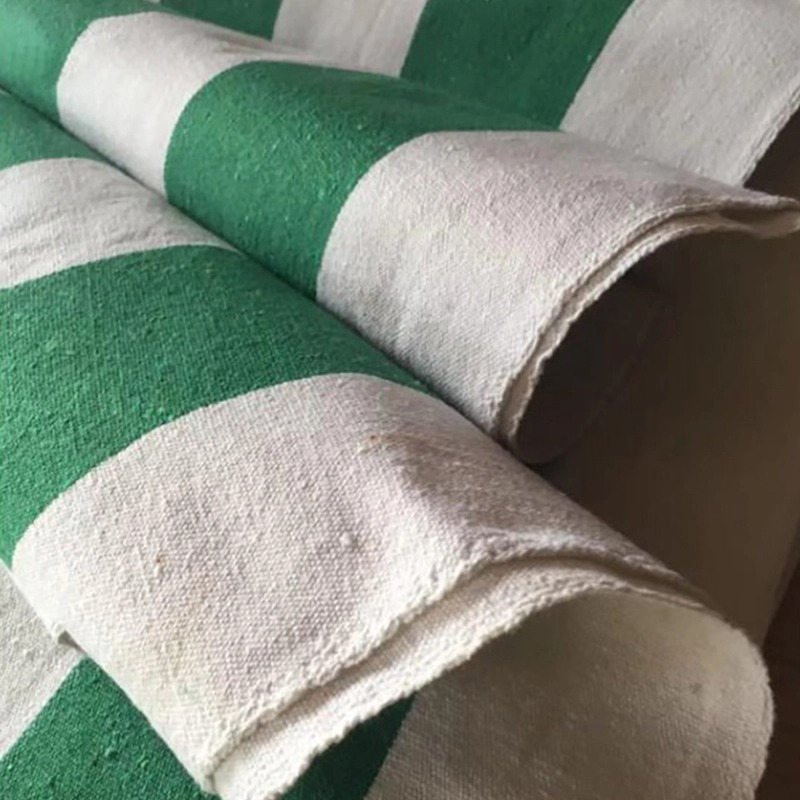
Sustainability is increasingly shaping performance expectations. Biodegradable Industrial Textile addresses environmental impact without compromising functional requirements for outdoor use.
Outdoor textiles are often deployed in large surface areas and long-term projects. End-of-life disposal becomes a significant concern. Biodegradable Industrial Textile solutions reduce long-term environmental burden while supporting regulatory and corporate sustainability goals.
Sustainable performance also includes durability optimization. A longer-lasting Industrial Textile reduces material consumption and waste generation over time. Combining durability with controlled biodegradability represents a forward-looking performance requirement in outdoor environments.
Outdoor environments demand more from materials than any controlled indoor setting. The top 8 performance requirements for Industrial Textile in outdoor environments—weather resistance, UV stability, mechanical strength, fire and heat safety, moisture and chemical resistance, surface engineering, and sustainability—define whether a textile can perform reliably under constant stress.
By focusing on these performance-driven criteria, designers, engineers, and decision-makers can select Industrial Textile for outdoor use that delivers safety, longevity, and value throughout its lifecycle. Performance is not a single property but a system of interrelated requirements working together in real-world conditions.
1.What makes Industrial Textile suitable for outdoor environments?
Outdoor suitability depends on resistance to weather, UV radiation, mechanical stress, moisture, and heat. Industrial Textile must retain performance despite prolonged exposure to these factors.
2.Why is flame retardancy important for outdoor Industrial Textile?
Flame retardant Industrial Textile improves safety in environments where ignition risks exist and helps meet regulatory and insurance requirements.
3.How does coating improve Industrial Textile performance?
Coated Industrial Textile enhances resistance to water, UV exposure, abrasion, and chemicals while extending service life in outdoor conditions.
4.Is biodegradable Industrial Textile durable enough for outdoor use?
Yes, when properly engineered. Biodegradable Industrial Textile balances durability during use with reduced environmental impact at end of life.


