


Author: Site Editor Publish Time: 2026-06-05 Origin: Site
Inadequate outdoor protection exposes your assets to severe weather risks. This triggers damaged inventory, structural decay, and costly operational downtime. When rain, heavy wind, and harsh UV rays strike, flimsy consumer covers fail rapidly and leave critical equipment highly vulnerable. You must differentiate between these basic retail covers and industrial-grade PE (Polyethylene) plastic tarps. Manufacturers design true industrial variants specifically for high-stress, prolonged outdoor exposure. They rely on high-density core strength and advanced polymer coatings rather than mere visual thickness. The purpose of this guide is to establish clear, technical evaluation criteria for selecting a high-quality waterproof tarpaulin. You need to base your purchasing decisions on actual structural specifications rather than flashy marketing claims. You will learn exactly how to decode material metrics, evaluate edge engineering, and perfectly match the right tarp profile to your specific outdoor shelter requirements.
Material Matrix: PE tarpaulin offers the highest strength-to-weight ratio for general outdoor shelter, while PVC tarpaulin serves better for continuous industrial friction (e.g., truck tarpaulin).
Crucial Specs: Actual durability is dictated by GSM (Grams per Square Meter), mil thickness, weave density, and UV inhibitor treatments—not just visual thickness.
Structural Integrity: Long-term performance relies heavily on reinforced hems, corner guards, and the quality/spacing of rust-proof grommets.
Application Specifics: Specialty use cases, such as fumigation canvas tarpaulin or extreme cold-weather enclosures, require specific material composites to prevent cracking and gas leakage.
Selecting the wrong base material leads to premature tearing and rapid UV degradation. It also causes unnecessary overspending on heavily over-engineered fabrics. You must match the core polymer material to the specific environmental stressor. The business problem usually begins when buyers assume all heavy-duty plastics offer identical performance. Industrial shelter fabrics primarily divide into two distinct categories: polyethylene and polyvinyl chloride.
A standard PE tarpaulin utilizes a highly engineered, multi-layer construction. It begins with a woven core made of high-density polyethylene (HDPE) strips. Manufacturers then coat both sides of this core using low-density polyethylene (LDPE). This dual-layer strategy delivers significant advantages. It remains lightweight, highly water-resistant, and cost-effective. Workers find PE exceptionally easy to handle for large outdoor shelters. However, PE does possess specific limitations. It remains vulnerable to extreme mechanical friction over time when you compare it to heavier polymers.
You must contrast this against a PVC tarpaulin. This alternative relies on a polyester mesh core heavily coated in polyvinyl chloride. This combination creates a much heavier, higher-cost product. Industry standards strictly recommend PVC for high-abrasion applications. You will see PVC deployed for permanent structural covers or intense transit scenarios. For 80% of outdoor shelter, agriculture, and standard industrial coverage, high-quality PE strikes the optimal balance of overall performance and utility.
Best Practice: Use PE for static outdoor shelters, temporary roof covers, and seasonal agriculture protection.
Common Mistake: Deploying standard PE fabrics for high-abrasion machinery covers. Constant rubbing against sharp metal corners will compromise the LDPE coating.
Material Comparison: PE vs. PVC | ||
Specification | PE (Polyethylene) | PVC (Polyvinyl Chloride) |
|---|---|---|
Core Material | Woven HDPE Strips | Polyester Mesh |
Coating | LDPE Lamination | Polyvinyl Chloride |
Weight Profile | Lightweight to Medium | Heavyweight |
Flexibility | High (even in mild cold) | Moderate (can stiffen in cold) |
Primary Use Case | Static outdoor shelters, agriculture | High-friction, transport, permanent structures |
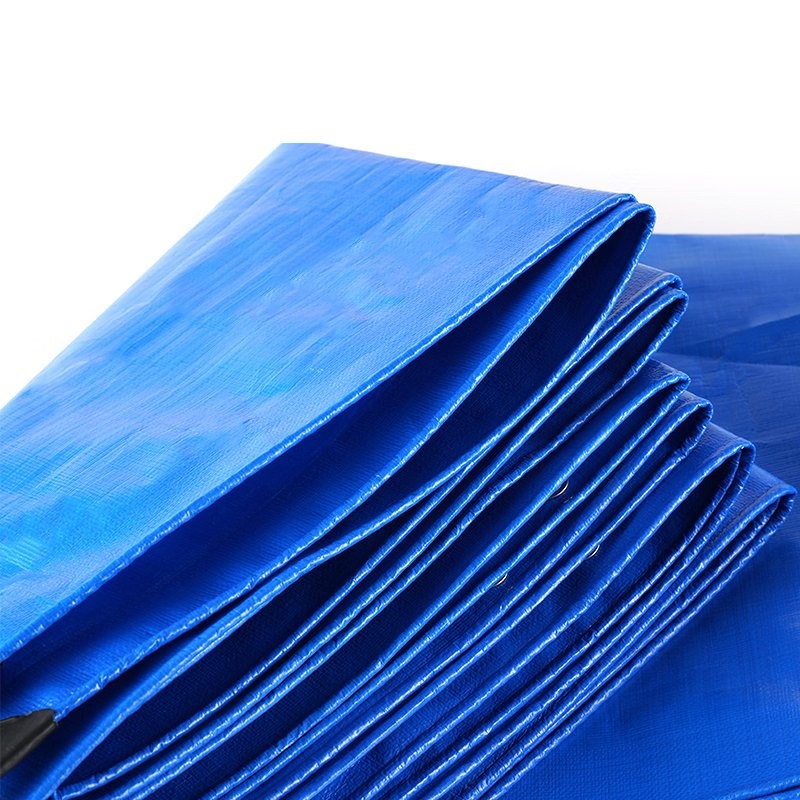
You cannot evaluate a protective cover simply by touching it. True quality relies on quantifiable technical dimensions. The first metric you must verify is the weave density and yarn count. Manufacturers measure this by counting the individual yarns per square inch. A tighter weave drastically increases both puncture and tear resistance. Standard covers often feature an 8x8 or 10x10 weave. High-quality industrial covers require a 14x14 or 16x16 weave density. This tight grid prevents minor punctures from expanding into catastrophic tears during a windstorm.
Thickness and weight serve as the next critical indicators. Industry standards use "mil" (one-thousandth of an inch) to denote thickness. Light-duty options range from 5-6 mils. Medium-duty covers sit between 8-10 mils. Heavy-duty applications demand 12+ mils. You must also measure the weight in GSM (Grams per Square Meter). A true heavy-duty cover exceeds 200 GSM. We advise buyers to verify the GSM rating rather than relying solely on mil thickness. Manufacturing processes can sometimes trap microscopic air pockets inside the plastic. These air pockets artificially inflate thickness readings without adding structural strength. GSM always reveals the actual material density.
Coating and UV stabilization dictate the actual lifespan of the fabric. You must ensure the fabric features dual-sided lamination. Untreated plastic becomes brittle in a matter of months when exposed to direct sunlight. Premium tarps feature extrusion-coated UV inhibitors. Manufacturers blend these chemicals directly into the LDPE coating layer. This specialized treatment ensures multi-year lifespans by absorbing and dispersing harmful ultraviolet radiation.
Color dictates more than aesthetics; it drives thermal performance. You must match the color profile to your specific climate needs.
Silver/Black Tarps: These serve as highly engineered temperature controllers. You place the silver side facing up to deflect radiant heat away from the shelter. The black underside completely blocks light penetration. This creates a cool, dark environment ideal for temperature-sensitive coverage.
Clear/Transparent Tarps: These utilize high-tensile transparent polymers. You need these options for greenhouse enclosures or patio weatherproofing. They allow vital light transmission while providing robust windproof capabilities.
White Tarps: These provide moderate light transmission and reflect heat. They work well for outdoor event tents or construction site covers where workers require natural daylight.
Industrial covers rarely fail right in the center of the fabric. They almost exclusively fail at the anchor points and along the outer edges under heavy wind shear. When wind lifts a shelter cover, it generates massive kinetic energy. This energy concentrates directly on the grommets and the hemline. If the edge engineering lacks reinforcement, the fabric will shred instantly.
You must evaluate the grommet specifications carefully. Aluminum serves as the industry standard for light duties. However, aluminum can deform under high tension. You should seek brass or stainless steel grommets for demanding environments. These materials remain corrosion-resistant, making them ideal for coastal environments or heavy winter use. Spacing intervals also matter significantly. Standard consumer covers space their grommets every 36 inches. Industrial high-stress covers space their grommets every 18 inches. Closer spacing distributes the wind load evenly across a much larger section of the hemline.
Hem reinforcement acts as the final defense mechanism. Premium options fold the edge material over and heat-weld it around an internal poly-rope. This poly-rope reinforced hem prevents hem blowouts by providing a solid, flexible core for the grommets to bite into. Furthermore, you must look for reinforced corners. The four corners endure the highest multi-directional stress. The necessity of molded plastic corner bars for heavy-duty applications cannot be overstated. These thick plastic triangles rivet directly into the corners to lock the fabric, rope, and grommet together into a single indestructible unit.
You achieve the best performance when you match specific material profiles to distinct environmental demands. General-purpose coverage differs vastly from commercial transport or chemical containment. For outdoor shelters and camping enclosures, you require high UV resistance and moderate GSM. A moderate weight ensures necessary portability for manual deployment. You also need robust grommets along the ridge-line to handle structural tension from ropes and poles.
Logistics and commercial freight demand a completely different approach. When moving cargo at highway speeds, you must secure the load against severe wind-whip. A specialized truck tarpaulin requires high abrasion resistance. Standard grommets often tear out under freight straps. Therefore, commercial transport covers integrate heavy-duty D-rings stitched directly into industrial webbing. This allows truckers to use winch straps without ripping the base fabric.
Agriculture and pest control operations face stringent chemical requirements. If you perform structural pest eradication, you must use a specialized fumigation canvas tarpaulin. These covers must be highly impermeable to maintain deadly gas concentrations within the structure. Standard stitched hems leak gas through the needle holes. Fumigation covers require specific thermal-welded seams. The manufacturer melts the fabric panels together to create a continuous, air-tight barrier.
Winter and cold weather protection introduce thermal challenges. Standard plastics freeze, stiffen, and shatter under sub-zero conditions. You must verify the necessity of cold-crack resistant PE formulations. Chemists add specific plasticizers to the polymer blend during manufacturing. This ensures the fabric maintains flexibility and sheds heavy snow loads in sub-zero temperatures, completely avoiding the brittleness associated with standard retail plastics.
Purchasing the correct material only solves half the problem. Poor installation techniques will destroy even the highest-rated fabrics. You must understand common rollout risks to protect your investment.
Over-tensioning stands out as the most frequent cause of premature failure. Users often apply heavy ratchet straps directly to standard grommets. A ratchet strap exerts thousands of pounds of static force. When the wind shifts, the rigid strap allows zero flexibility, instantly tearing the grommet from the fabric. We highly recommend using heavy-duty bungee ties for dynamic load distribution. Bungee cords stretch and absorb sudden wind shocks, protecting both the fabric and the anchor point. Chemical incompatibility represents another critical risk. Certain solvent exposures, petroleum spills, or harsh industrial cleaners can rapidly degrade the PE lamination. You must keep standard plastics away from aggressive chemical zones.
When you prepare to procure these covers at scale, you need strict vendor shortlisting criteria. Treat this process like purchasing an engineered asset. Demand precise documentation before you buy.
Require transparent spec sheets: The vendor must clearly state the GSM, mil thickness, and weave count. Walk away if they only use vague terms like "super heavy duty."
Verify seam construction: Ask if the panel seams are heat-welded or stitched. Heat-welding creates a waterproof bond, whereas stitching creates thousands of tiny puncture holes prone to leaking.
Check warranty terms: Read the fine print regarding UV degradation versus mechanical damage. Reputable manufacturers guarantee their UV inhibitor lifespan for specific timeframes.
Follow these shortlisting rules to ensure you receive genuine industrial performance rather than repackaged retail-grade plastics.
You must treat the purchase of a waterproof cover as procuring an engineered protective asset, not a disposable commodity. Settling for retail-grade plastics leads directly to exposed inventory and frustrating replacement cycles. Industrial-grade materials provide the structural resilience required for serious outdoor shelter.
To guarantee successful protection, you must match the GSM, core material, and edge reinforcement directly to your specific environmental stressors. Tighter weave densities, advanced UV stabilizers, and reinforced hem architecture define actual longevity in the field. Ignoring these specifications guarantees premature failure at the worst possible moment.
Assess your operational needs immediately. Calculate your total square footage and identify your primary environmental stressors, whether they involve heavy wind, UV exposure, or sub-zero temperatures. Armed with this data, reach out to verified manufacturers and request detailed specification sheets or customized bulk quotes today.
A: Polyethylene (PE) is lightweight, highly waterproof, and cost-effective, making it ideal for general outdoor shelters and agriculture. Polyvinyl Chloride (PVC) is much heavier and highly abrasion-resistant. PVC serves best for permanent structural covers and industrial high-friction applications.
A: A high-quality heavy-duty PE cover (over 200 GSM with extrusion-coated UV inhibitors) can last 2 to 4 years under continuous outdoor exposure. Light-duty consumer alternatives typically degrade and turn brittle within 6 to 9 months under heavy UV stress.
A: Yes. The silver surface reflects radiant thermal energy away from the shelter, keeping the interior cooler. The black underside effectively blocks light transmission. This dual-action thermal dynamic provides superior protection for temperature-sensitive inventory.
A: Heavy-duty PE works for temporary or light transit securing. However, commercial highway trucking and gas-tight fumigation require specialized materials. Trucking relies on abrasion-resistant PVC with D-rings. Fumigation requires highly impermeable thermal-welded canvas to prevent dangerous gas leakage.


