


Author: Site Editor Publish Time: 2026-05-23 Origin: Site
Procurement reality is often unforgiving. Specifying the wrong protective fabric directly leads to accelerated material degradation. This error causes sudden workflow interruptions. It also generates frustrating, recurring replacement costs. You simply cannot afford unexpected failures when protecting valuable industrial assets.
Too often, buyers view these flexible covers as basic commodities. They treat them as simple plastics rather than engineered solutions. This misconception causes businesses to waste massive amounts of capital on inferior materials. These weak plastics simply degrade under normal environmental stress. We define a true PVC tarpaulin not merely as a standard tarp. It is a highly engineered industrial composite. It features a high-tensile polyester base matrix. Manufacturers fully encapsulate this strong matrix in protective polyvinyl chloride.
This article outlines a strict technical evaluation framework. You will learn to assess these industrial fabrics against common market alternatives. We help you match specific material capabilities directly to your high-stress applications. We also equip you with practical field-testing methods. You can use these sensory methods to verify material authenticity instantly.
Engineered Durability: PVC tarpaulin achieves 100% waterproof capabilities and extreme tear resistance through a composite structure (polyester scrim + PVC coating), not just surface treatments.
TCO Advantage: While initial procurement costs are higher than PE (Polyethylene) or canvas, PVC yields a lower Total Cost of Ownership in heavy-duty applications due to a 5-to-10-year lifespan and minimal maintenance.
Specification Matters: Evaluation must factor in structural metrics—such as 1000+ Denier ratings, coated vs. laminated manufacturing, and B1/B2 flame retardancy—to ensure operational safety.
Sensory Verification: Procurement teams can mitigate supplier fraud using simple on-site validation methods, including touch, flexibility, and combustion testing.
Many procurement professionals assume all tarps offer identical weatherproofing capabilities. This represents a very costly misconception. You must understand the underlying physical composition. This internal structure justifies the bold performance claims made by premium manufacturers. Let us break down the exact engineering behind these industrial covers.
Base Fabric (The Skeleton): Woven polyester fibers form a tough inner scrim. This crucial skeleton dictates the overall tensile strength. It actively resists mechanical tearing when placed under heavy load. Without this skeleton, the polymer would simply stretch and snap.
Polymer Coating (The Shield): Manufacturers apply a thick protective layer of liquid polyvinyl chloride. They execute this via a highly controlled dip-coating or knife-coating process. The polymer deeply penetrates the polyester yarns. It creates a completely impermeable barrier. This specific process ensures an uncompromising PVC tarpaulin waterproof durability outdoor uses baseline.
Thermoplastic Nature: The composite retains remarkable physical stability across broad temperature spectrums. You can safely deploy these covers in environments ranging from -30℃ to +70℃. The material expands and contracts predictably without cracking.
Inherent Resistance: Untreated polymers break down rapidly outdoors. Conversely, this composite naturally resists chemical degradation. It violently repels moisture to prevent harmful mold growth. It also withstands prolonged UV exposure without turning brittle.
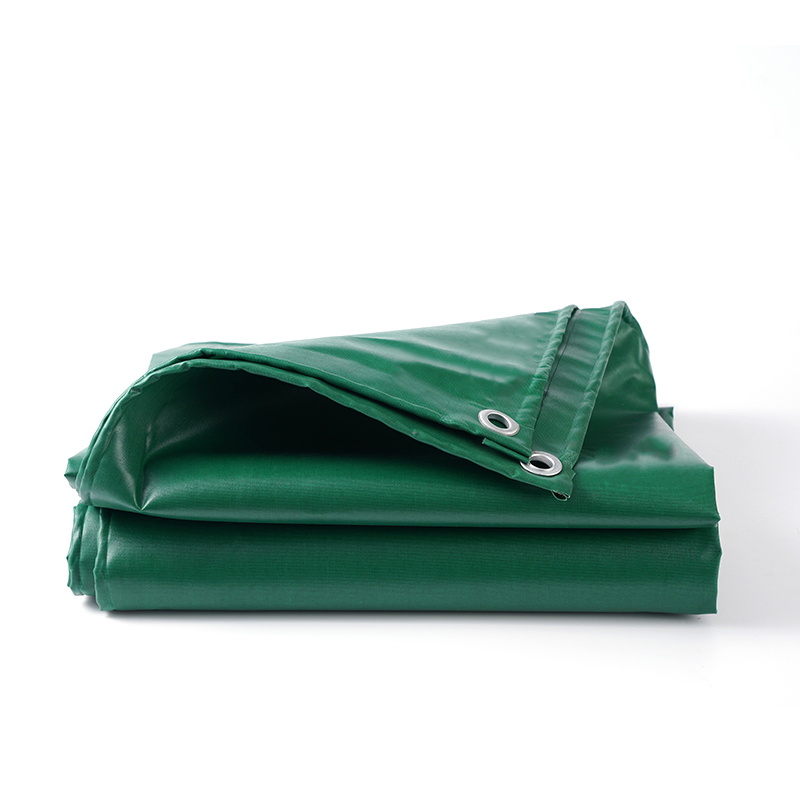
Buyers frequently default to cheaper material alternatives initially. They often fail to calculate the true replacement frequency. They also ignore hidden labor costs associated with swapping torn covers. Replacing a ripped cover every six months drains maintenance budgets rapidly. We must conduct a head-to-head material evaluation.
Canvas: This natural material breathes exceptionally well. It is fully biodegradable. However, canvas is not inherently waterproof by nature. You must treat it chemically with wax. Canvas also invites heavy mold if you store it while damp. Use it strictly for condensation-sensitive coverage.
PE (Polyethylene): This plastic remains lightweight. It stays highly flexible even in freezing temperatures. The initial purchase cost is extremely low. PE works perfectly for one-to-two-year temporary sheltering. It fails rapidly under continuous industrial friction.
Polyvinyl Chloride: This engineered material is undeniably heavier. It requires a significantly larger initial capital outlay. However, its immense abrasion resistance shines in harsh environments. The multi-year UV stability dramatically reduces frustrating replacement cycles. It effectively eliminates costly operational downtime.
Material Type | Primary Benefit | Water Resistance | Ideal Use Case | Expected Lifespan |
|---|---|---|---|---|
Canvas | High breathability | Requires wax treatments | Condensation-prone storage | Medium (Prone to mold) |
Polyethylene (PE) | Lightweight & cheap | Naturally waterproof | Temporary site sheltering | Short (1-2 years) |
Polyvinyl Chloride | Extreme durability | 100% impermeable | Heavy-duty industrial | Long (5-10+ years) |
Consider stationary industrial assets or high-speed transport vehicles. Think about semi-permanent warehouse structures. For these applications, immense longevity mathematically offsets the premium price. You usually see a full return on your investment within the first 24 months. You stop buying replacements completely. You stop paying crews to install new covers.
We must guide buyers away from generic, useless product descriptions. You need quantifiable manufacturing metrics. These metrics are strictly necessary for proper vendor shortlisting. Do not accept vague promises of high strength.
Laminated Construction: Manufacturers heat-press a thin polymer film onto the base fabric. This specific method is highly cost-effective for medium-term use. Light-duty event tents often use laminated materials successfully. They do not survive heavy friction.
Coated (Dip/Knife) Construction: Liquid polymer penetrates the polyester fibers seamlessly. This method creates an unbreakable molecular bond. It is absolutely mandatory for maximum abrasion resistance. Knife-coating effectively eliminates dangerous delamination risks during extreme outdoor uses.
Yarn Thickness: Always look for Denier (D) ratings on technical sheets. You need 1000D or higher for commercial applications. Anything lower risks catastrophic failure under high wind shear.
Weave Density: Demand a minimum requirement of 14x14 threads per square inch. This tight density guarantees optimal puncture resistance against sharp corners. It distributes heavy loads evenly across the fabric.
Never ignore safety regulations. Verify B1 or B2 fire-retardant certifications before purchasing. This ensures crucial operational safety compliance. You should also request anti-static treatments for volatile environments. Ask for specific UV-stabilizer inclusions based on your region's solar intensity. Always match these chemical additives directly to your facility's regulatory environment.
You must intelligently map material capabilities to specific industrial workflows. In many sectors, fabric failure is simply not an option. A failure could ruin expensive cargo or compromise safety. Let us explore these demanding, high-stress environments.
Transport companies rely heavily on custom-fitted truck side curtains. Flatbed operators need rugged cargo covers. The protective fabric must withstand sustained highway wind drag. It endures immense mechanical friction at heavy tie-down points. Generic plastics tear instantly at 70 miles per hour. Engineered composites handle these forces flawlessly.
Modern logistics facilities utilize high-speed roll-up doors. They also deploy heavy-duty loading dock seals. These applications require immense flexibility and toughness. A rigid material will fail quickly here. The fabric survives thousands of rapid folding cycles daily. It operates flawlessly without fatiguing or micro-cracking over time.
Large-scale flexible hangar doors present another extreme engineering challenge. These massive doors span 20 to 60 meters wide. The fabric actively acts as a vital structural membrane. It powerfully resists high wind loads. It protects highly sensitive aviation assets from severe weather.
Heavy-duty temporary roofing demands extreme weather resistance during structural renovations. Chemical-resistant containment berms prevent hazardous liquid spills from contaminating soil. Climate-controlled livestock enclosures rely on thick polymer barriers. They maintain safe, consistent internal temperatures year-round. These heavy-duty requirements demand superior PVC tarpaulin waterproof durability outdoor uses functionality.
Supply chain dilution is a stark, unfortunate reality. Unscrupulous suppliers sometimes pass off inferior PE as heavy-duty composite. You must equip your procurement team properly. They need reliable field-testing methodologies.
Use these five distinct methods to audit your deliveries instantly:
Touch & Tear: Authentic material feels wax-smooth to the touch. You need immense mechanical force to tear it manually. Conversely, PE has a distinct woven, bumpy texture. It stretches and snaps much easier.
Acoustics: Shaking a piece of PE produces a crisp, loud crinkling sound. It sounds like a cheap grocery bag. The heavier polymer composite yields a dull, muffled flap.
Immersion: Authentic heavy-duty coated fabrics feature a high molecular density. Therefore, they sink immediately when placed in water. Polyethylene always floats.
The Combustion Test (Fire Safety): Ignite a small sample safely outdoors. PE burns rapidly with a yellow flame. It drips molten wax and smells exactly like a burning candle. True composite behaves differently. It burns with a yellow-green flame. It emits a sharp, acrid odor. Crucially, it self-extinguishes immediately when you remove the heat source.
We always operate transparently regarding environmental impacts. Traditional polyvinyl chloride remains notoriously difficult to recycle fully. It often ends up in landfills. Your corporate ESG goals might mandate strict zero-landfill policies. If so, ask your suppliers about TPO. Thermoplastic Polyolefin (TPO) provides a 100% recyclable alternative. It suits forward-looking procurement teams perfectly.
Specifying the correct protective fabric represents a highly strategic investment. It ensures long-term asset protection. You must consciously shift your focus. Stop looking at the initial cost per square meter. Start calculating the actual cost per year of reliable service. Value always outlasts cheap pricing.
Audit your current tarp replacement frequencies today. Check your procurement logs carefully. Are you replacing covers more than once every 18 months? If yes, initiate a pilot test using a 1000D coated fabric immediately. Monitor the performance difference closely.
Stop guessing about material strength. Contact your shortlisted suppliers today. Request official technical data sheets (TDS). Demand physical material swatch samples delivered to your office. Conduct the precise sensory and structural validations outlined above. Secure the absolute best environmental protection for your business operations.
A: Because the polymer coating completely seals the inner polyester base, the material is completely impermeable. It achieves a genuine 100% waterproof rating. This differs significantly from traditional canvas. Canvas relies purely on surface tension and temporary waxes to repel moisture.
A: Standard formulations can become rigid in extreme cold, impacting foldability. If your operations run consistently below -20°C, you must specify "cold-crack resistant" chemical formulations. Alternatively, high-grade PE might serve better if extreme sub-zero flexibility is your absolute priority.
A: Yes. Because the material is a true thermoplastic, you can permanently weld punctures and tears using basic hot-air tools. You can also repair minor damage rapidly with industrial vinyl-compatible adhesives and patch kits. This drastically extends the asset's useful life.


