


Author: Site Editor Publish Time: 2026-07-03 Origin: Site
Procuring commercial materials demands absolute precision from your team. You face tight operational budgets and increasingly strict safety codes daily. A single material failure can halt operations instantly, causing massive logistical delays. Standard covers often fail under extreme weather conditions. They also struggle to pass rigid fire marshal inspections during municipal audits. This exposes businesses to massive liability risks continuously. Denied insurance claims and permanently compromised assets can follow these compliance failures quickly. Your reputation depends on deploying assets surviving unpredictable environments safely.
We will detail the structural and compliance benefits of specialized covers thoroughly. You will learn how to evaluate suppliers for commercial procurement effectively. This guide gives procurement teams a clear, actionable framework. By understanding the underlying chemical engineering, you can make smarter purchasing decisions. You can finally secure reliable fabrics for critical, high-stakes applications.
Compliance is Non-Negotiable: Certified fire-retardant materials are required to meet event safety standards (e.g., NFPA 701, B1, M2) and protect high-value transit cargo.
Engineered Durability: The combination of a strong base mesh and specialized chemical coatings provides superior tear resistance and weatherproofing compared to untreated alternatives.
Supplier Verification: Partnering directly with a qualified manufacturing facility ensures access to verifiable batch-testing data and customized roll specifications.
Commercial operations cannot rely on basic weather protection. You must mitigate risks actively across all deployments. Specialized materials provide a critical defense line. They protect human lives and valuable inventory alike.
Local fire marshals enforce stringent municipal safety regulations rigorously. You must navigate these inspections carefully before opening any venue. Non-compliant materials usually result in immediate shutdown orders. These abrupt disruptions cause severe financial losses instantly. They also damage corporate reputations permanently among your clientele.
You need reliable covers to protect guests and high-value inventory. Specialized fabrics ensure uninterrupted event operations during peak seasons. They resist accidental ignitions from hot lighting equipment or portable heating units. The fabric acts as a passive safety barrier protecting everyone inside.
Best Practice: Always keep physical copies of fire certification documents on-site. Inspectors frequently demand immediate proof during surprise walkthroughs.
Common Mistake: Assuming a generic "weatherproof" label includes fire resistance. You must verify specific municipal compliance codes beforehand.
Highway transit exposes cargo to numerous unpredictable hazards daily. Road debris sparks can easily ignite standard canvas covers. Adjacent vehicle fires pose severe threats during traffic accidents. You must shield volatile or high-value cargo from these external ignition sources.
Proactive risk management reduces corporate liability significantly. It shields your company from devastating negligence claims. Many commercial insurers offer lower premiums for proactive safety measures. They routinely reward operators utilizing certified flame-resistant equipment. Protecting freight properly ensures long-term profitability and better client trust.
Understanding material construction helps you make better purchasing decisions. The manufacturing process directly dictates field performance. You cannot judge a fabric purely by its outer appearance.
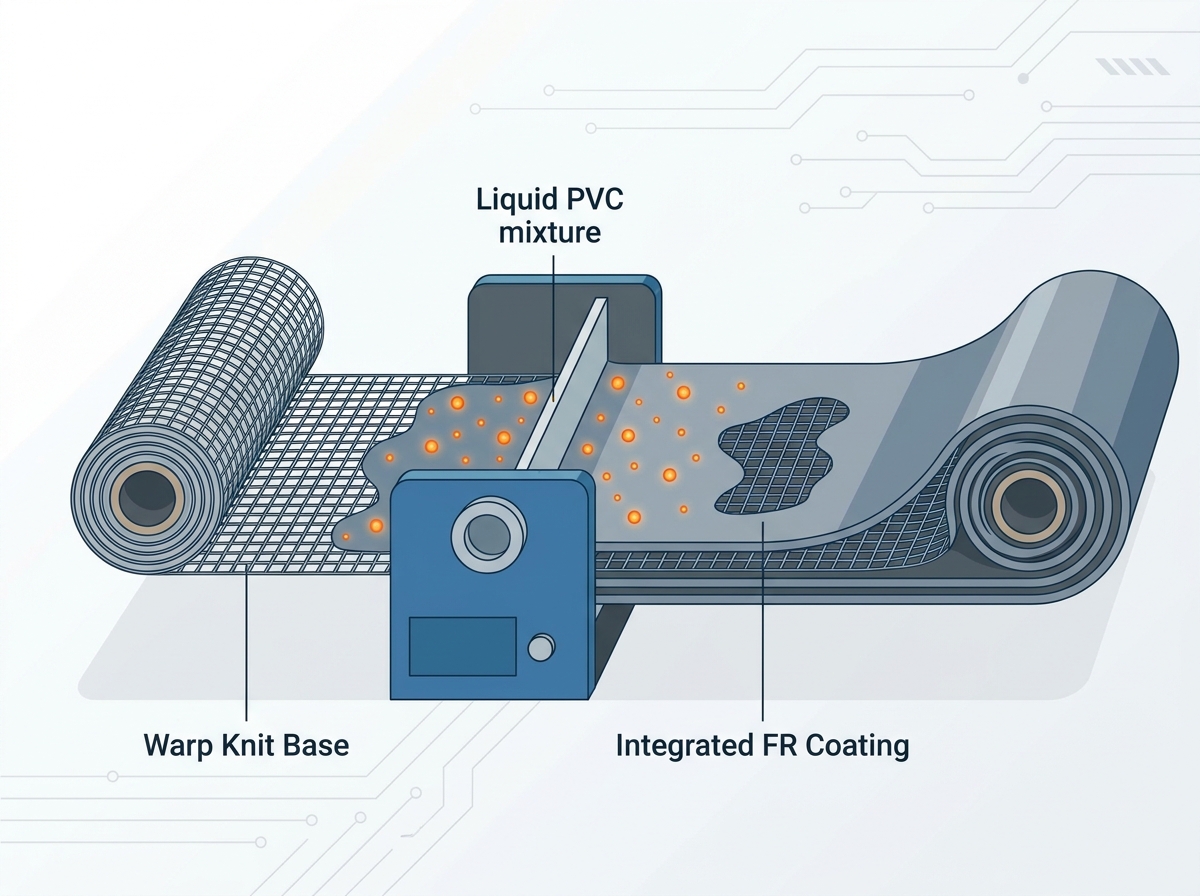
Mechanical strength starts at the core layer. You need a robust base to handle extreme physical stress. This is where warp knitting pvc fabric excels perfectly in commercial environments. It provides the necessary mechanical stability. This unique structure prevents catastrophic tear propagation effectively. It performs brilliantly under severe high wind loads. It also survives punishing highway speeds easily without shredding. The interlocking synthetic yarns stop small punctures from expanding further.
The application method dictates chemical integration levels. We evaluate the coated pvc roll manufacturing method closely. Two primary techniques dominate the market: knife-coating and hot laminating.
Liquid knife-coating ensures uniform chemical integration. The fire-retardant chemicals bond deeply into the base mesh. They permeate every single fiber thoroughly. They are not merely topically applied. Conversely, laminating just glues distinct layers together. These laminated layers frequently peel under intense heat or extreme UV exposure.
Manufacturing Method | Chemical Integration | Durability Under Stress | Best Use Case |
|---|---|---|---|
Knife-Coating | Deeply embedded into fibers | Exceptional (No delamination) | Heavy commercial, long-term outdoor |
Hot Laminating | Topical layer adhesion | Moderate (Prone to peeling) | Short-term, light-duty usage |
We must clarify the precise definition of flame retardancy. The material is fundamentally designed to self-extinguish. It actively resists ignition from minor or transient sources. It is not entirely fireproof. You must establish realistic operational expectations immediately.
If exposed to a continuous, massive fuel fire, it will eventually melt. However, once the primary heat source is removed, the fabric stops burning instantly. This self-extinguishing property saves critical seconds during unexpected emergencies. It prevents the cover itself from becoming a dangerous secondary fuel source.
Selecting the right material requires systematic, objective evaluation. You cannot rely on vague marketing claims alone. You must analyze specific performance metrics carefully.
Move far beyond generic safety claims. You must request authentic third-party lab reports. Certifications prove absolute regulatory compliance.
Follow this verification framework to confirm credentials:
Ask the supplier for the most recent laboratory test report.
Verify the testing facility holds recognized international accreditation.
Check the expiration date on the certification document meticulously.
Ensure the tested material weight matches your exact order specifications.
Different regions demand different compliance codes. Use this reference chart to guide your specific requirements.
Standard Code | Region/Market | Primary Focus |
|---|---|---|
NFPA 701 | North America | Flame propagation in hanging textiles |
DIN 4102 B1 | Europe (Germany) | Difficult to ignite building materials |
NFP 92-503 M2 | Europe (France) | Self-extinguishing reaction to fire |
You must balance heavy-duty requirements carefully. An industrial tent pvc tarpaulin requires massive structural strength. These architectural fabrics often range from 700gsm to 900gsm. They stay erected for months facing harsh elements continuously.
Conversely, daily transit requires significant handling flexibility. A reliable flame retardant truck cover must fold easily. Drivers manually secure these heavy covers in freezing conditions. You should target 500gsm to 650gsm for logistics applications. This precise range prevents excessive driver fatigue while maintaining crucial safety ratings.
Secondary properties dictate overall project success heavily. UV stabilization prevents rapid solar degradation across multiple seasons. Anti-mildew treatments stop aggressive fungal growth in damp storage environments. Cold-crack resistance keeps the material pliable in sub-zero winter climates.
You must assess all these factors concurrently. They directly impact material longevity. Ignoring secondary treatments often leads to premature mechanical failures.
Strategic sourcing requires vetting actual production capabilities deeply. Brokers often mask the true origin of industrial materials.
Bypassing intermediaries offers massive financial and technical advantages. Working directly with a fire retardant pvc tarpaulin factory improves quality control substantially. You gain direct access to senior technical support engineers. They can adjust chemical formulations based on your specific regional climate.
Furthermore, you procure genuine fire retardant pvc tarpaulin without hidden distributor markups. Direct communication eliminates dangerous specification translation errors. It ensures your exact technical requirements reach the production floor directly.
Consistent chemical mixing is absolutely crucial for safety. A slight formulation error compromises the entire batch. You should request lot-specific testing data proactively. This ensures every single roll meets the specified safety rating perfectly.
Best Practice: Ask factories to retain a physical swatch from your specific production run. This helps resolve future warranty claims quickly and fairly.
Evaluate the factory’s ability to customize physical dimensions. You can specify exact roll widths and weights easily. You can choose bespoke colors matching corporate branding precisely. You can select a glossy or matte surface finish.
These customizations minimize fabric waste during final fabrication. Side-curtains and custom marquees require precise raw materials. Custom roll widths reduce unnecessary cutting and overlapping seams.
Global shipping demands highly reliable manufacturing partners. You must evaluate MOQ (Minimum Order Quantity) flexibility beforehand. Smaller initial MOQs allow you to run field tests safely. Assess their average production lead times carefully. Review their global shipping reliability track record constantly. Delays in raw materials will halt your fabrication lines entirely.
Upgrading to certified fire-retardant materials is a foundational investment. It guarantees operational continuity across your entire fleet or event space. You reduce severe corporate liability risks proactively. Strong base layers and stable chemical coatings deliver unmatched resilience. They survive harsh climates and strict safety inspections effortlessly.
Take these actionable next steps to secure your supply chain:
Audit your current material specifications immediately.
Identify crucial gaps in your existing municipal fire certifications.
Request physical sample swatches from shortlisted manufacturing partners.
Demand updated laboratory compliance certificates before placing any bulk orders.
A: Fire retardant means the material actively resists ignition. It automatically self-extinguishes when you remove the primary heat source. It will not act as continuous fuel. Fireproof suggests the material is completely impervious to fire, which is rarely true for synthetic textiles. You should always expect some material melting under extreme, sustained heat.
A: Chemically integrated retardants last the entire lifetime of the fabric. Knife-coating processes embed the protective chemicals deeply into the base mesh. They will not wash away during heavy rain. This differs greatly from cheap topical sprays, which require frequent reapplication after minor environmental exposure.
A: Yes, they require gentle cleaning protocols. You should use mild soap and soft brushes. You must avoid harsh chemical solvents entirely. Aggressive chemicals can strip the protective UV layers quickly. Preserving the outer surface ensures the embedded safety chemicals remain intact and highly effective for years.
A: You should look for standards relevant to your regional deployment. North American deployments typically require strict NFPA 701 certification. European projects generally demand DIN 4102 B1 or French M2 standards. Always verify these certificates through accredited third-party laboratories to ensure complete municipal compliance.


